Demetri Broxton
Oakland, CA
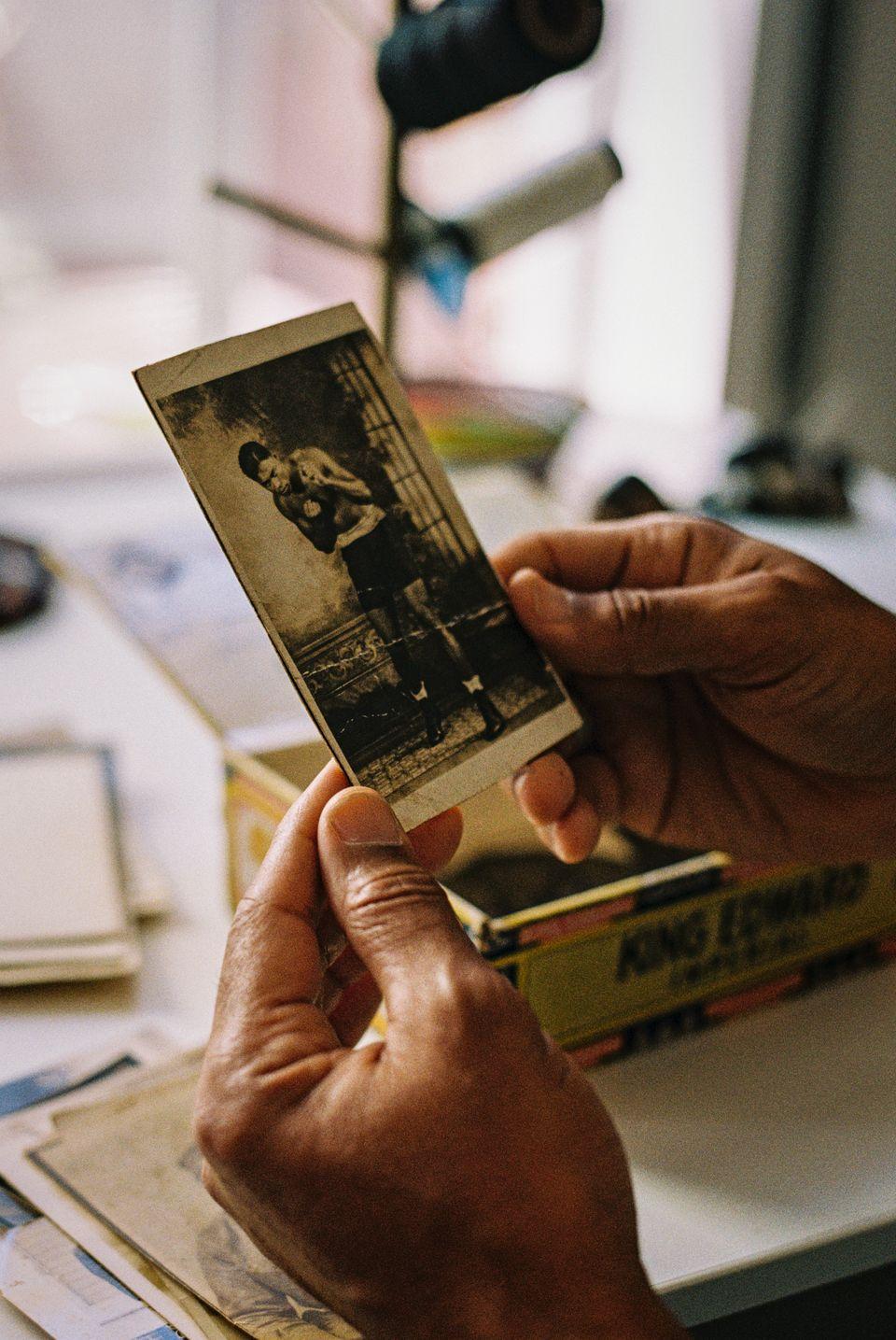
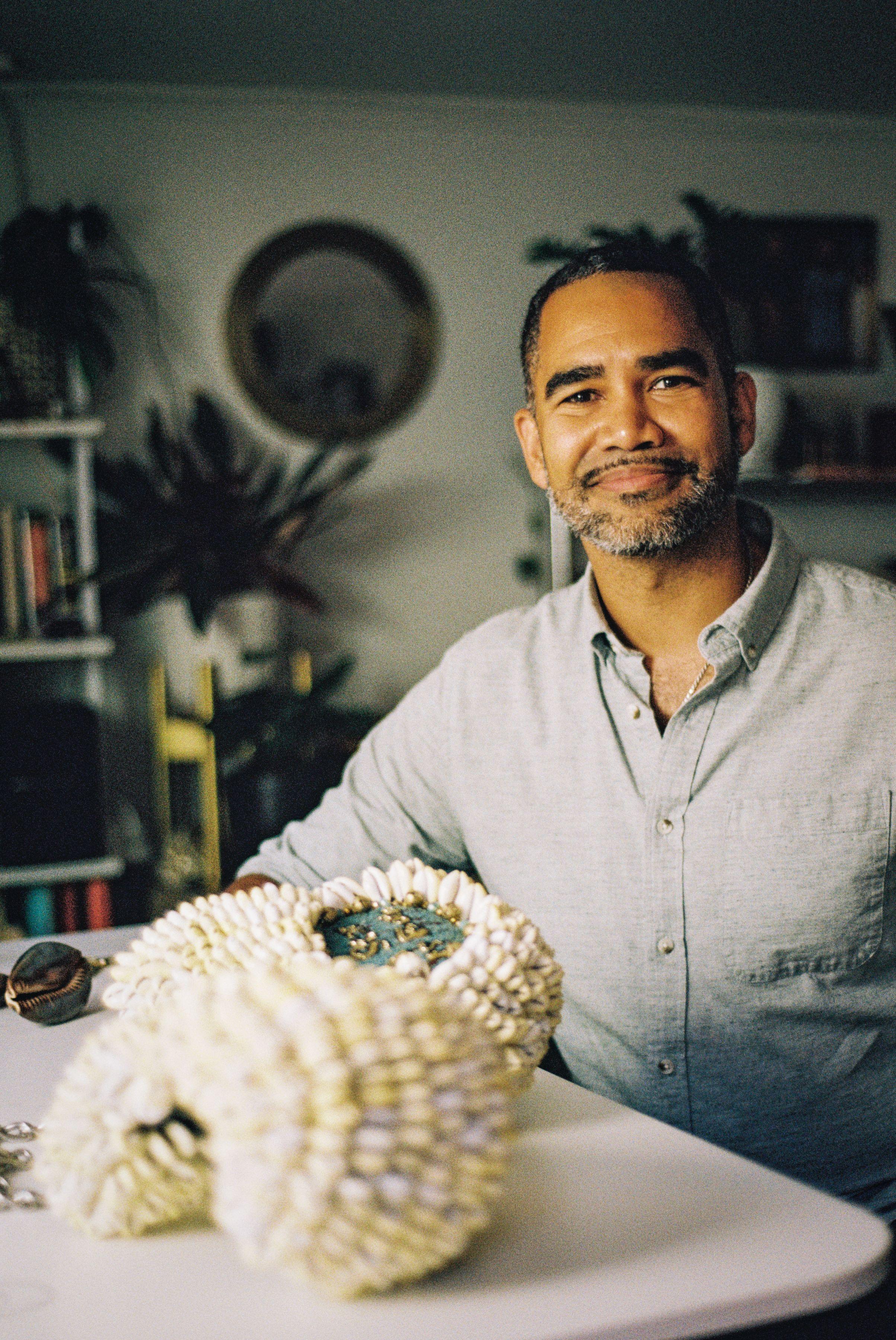
Craft can serve as a powerful link across generations. Bay Area artist and curator Demetri Broxton creates intricate and labor-intensive beadwork, partly inspired by his own Creole and Filipino heritage. These haunting works often depict his own ancestors and other figures from the Black diaspora, summoning a community across time.
Alongside his studio and curatorial practice, Broxton has built a career spanning museums, arts education, and nonprofit leadership. He currently serves as Executive Director of Root Division in San Francisco and previously held leadership positions at the Museum of the African Diaspora, where he was Senior Director of Education, and with the City of Berkeley’s Civic Arts Program.
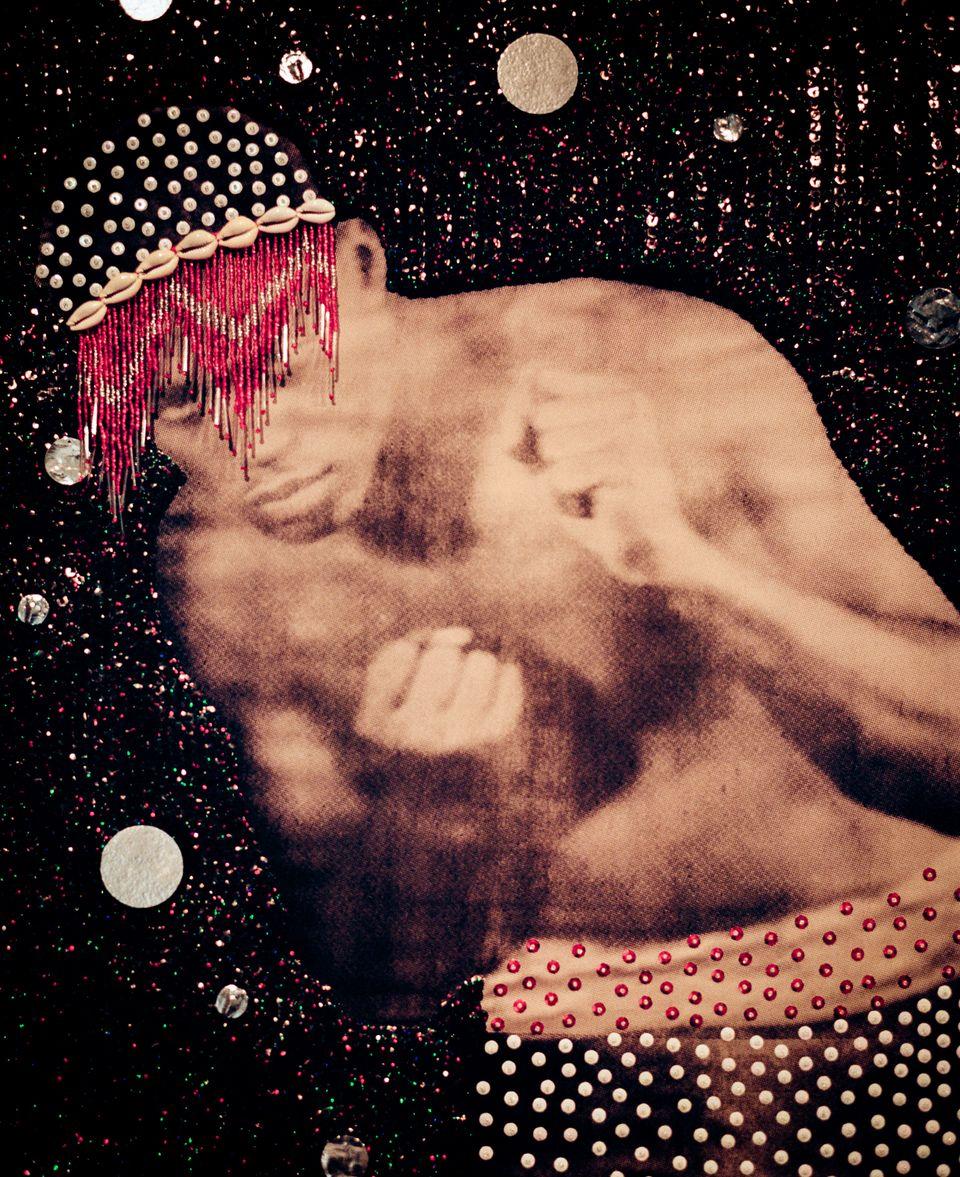
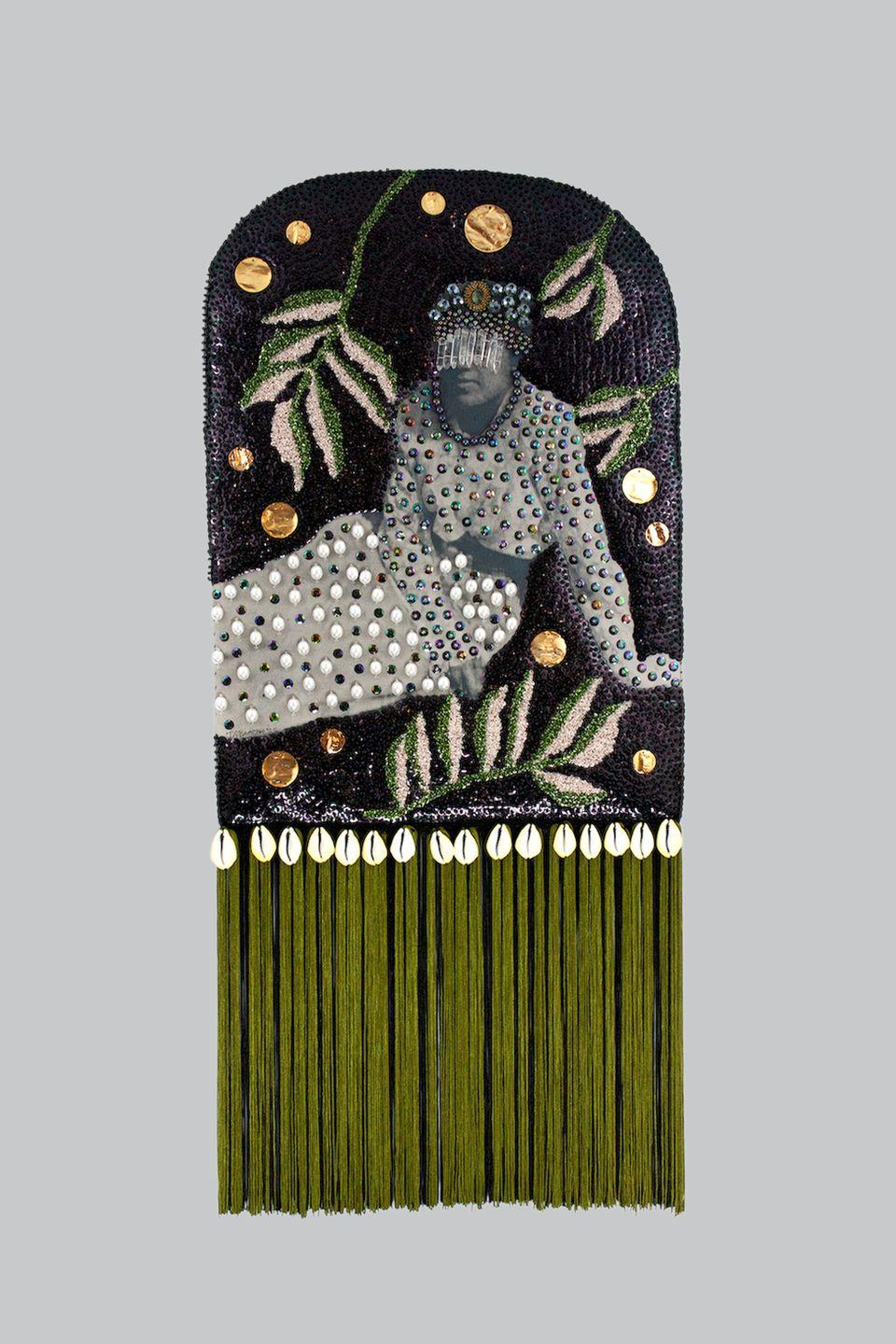
However Far the Stream Flows, It Never Forgets Its Source
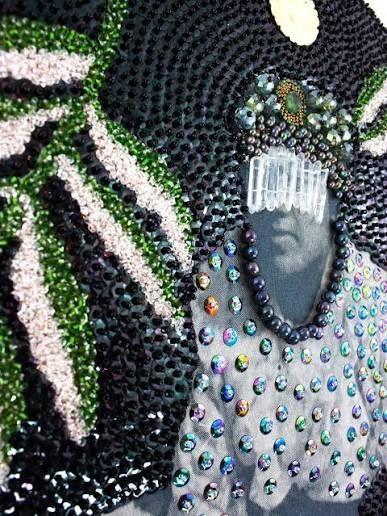
Japanese & Czech glass beads, sequins, cowrie shells, quartz, 24k gold plated brass, antique silk and rayon chainette, wool, serigraph printed on Japanese sateen cotton, mounted on birch board
2025
However Far the Stream Flows, It Never Forgets Its Source explores resilience, ancestral memory, and the transformative power of craft. The sequin textiles are created through slow, layered processes of screen printing, hand-beading, and stitching, resulting in radiant surfaces that draw from Black Mardi Gras Indian suits, Filipino devotional adornment, and other cultural practices of ceremonial dress.
Through this labor-intensive process, Broxton transforms commonplace materials into vessels of identity, protection, and cultural remembrance—asserting craft as a contemporary language of empowerment and storytelling
Interview with Demetri Broxton
Your work explores ancestry and cultural memory. How does making with your hands connect you to the histories and traditions you engage with?
My work is rooted in the belief that making can be a form of remembrance. Much of what I explore—ancestry, migration, cultural memory, and African diasporic traditions—has been carried forward through hands-on practices: sewing, quilting, beadwork, adornment, gardening, ritual object making, and other forms of labor that preserve knowledge across generations.
By working slowly and deliberately with my hands, I feel connected to those traditions and to the countless people whose names and stories may be lost but whose lives continue to shape my own.
What does the labor of beadwork contribute to the meaning of your work?
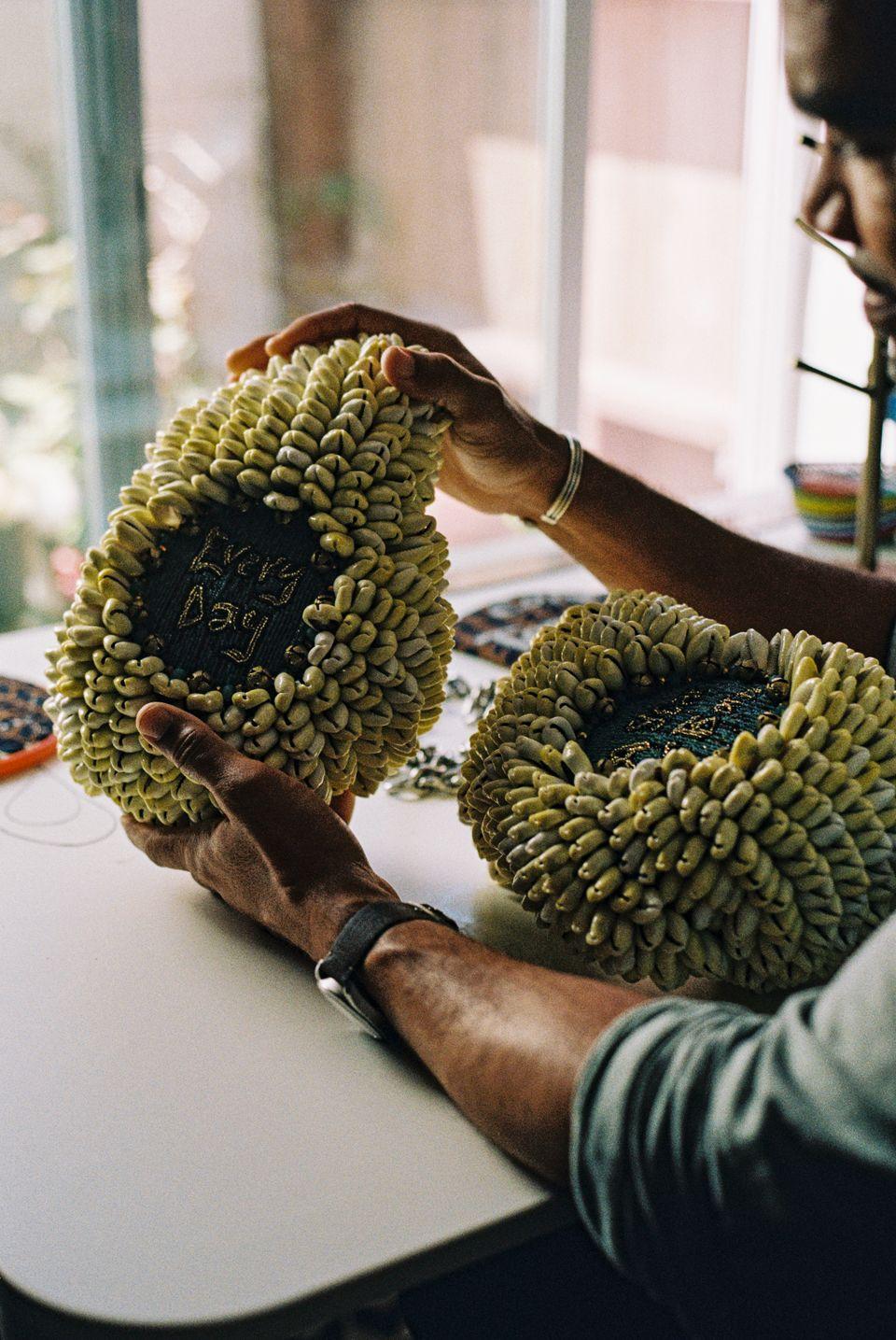
The physical act of making is important to me. The time required to make something by hand forces me to slow down and pay attention. Beadwork can be repetitive, meditative, and physically demanding, but that labor is also part of what gives the work its meaning.
The labor is not separate from the meaning; it is the meaning.
You spent years working in museums and arts organizations before fully committing to your studio practice. How has that experience shaped your work?
Working inside cultural institutions gave me a unique vantage point. I was able to study how artists use materials as vessels for complex ideas, how they build relationships with audiences and institutions, and how they communicate their work in ways that resonate with people.
One of the most important lessons I learned is that powerful work does not have to do everything at once. Often the strongest works are built around a clear idea that is executed with intention and depth. Those experiences also shaped how I think about visibility and who gets recognized as a craftsperson.
You spent years working in museums and arts organizations before fully committing to your studio practice. How has that experience shaped your work?
Working inside cultural institutions gave me a unique vantage point. I was able to study how artists use materials as vessels for complex ideas, how they build relationships with audiences and institutions, and how they communicate their work in ways that resonate with people. One of the most important lessons I learned is that powerful work does not have to do everything at once. Often the strongest works are built around a clear idea that is executed with intention and depth. Those experiences also shaped how I think about visibility and who gets recognized as a craftsperson.
What does it look like to sustain a studio practice while also holding a leadership role in the arts?
I have an inherent need and drive to make artwork. Like many artists, my artwork does not pay all my bills, so I have maintained a full-time career alongside my studio practice. In 2016, I made a commitment to myself that if I was going to have a day job, it would be in the arts. I wanted my professional life to support, rather than compete with, my creative life.
The balance is not easy. There are periods when one side demands more attention than the other, and I am not sure I will ever achieve a perfect equilibrium. What I have learned is that balance is not a fixed state but an ongoing negotiation. My work in the arts and my studio practice sustain one another, and both are essential parts of who I am.
What does it mean to receive this recognition at this stage of your beadwork practice?
Receiving the Spector Craft Prize is both an honor and an affirmation. My practice is rooted in labor-intensive processes that can take months to complete, often requiring thousands of beads, sequins, and hand-applied elements. Much of that work happens in solitude, driven by faith in an idea long before there is any certainty about how it will be received.
This recognition arrives at an important moment in my career. More than anything, the award gives me the confidence to dream bigger—to take risks, deepen my practice, and continue exploring the stories and histories that feel urgent to me.