Japheth Asiedu-Kwarteng
Edinburg, TX
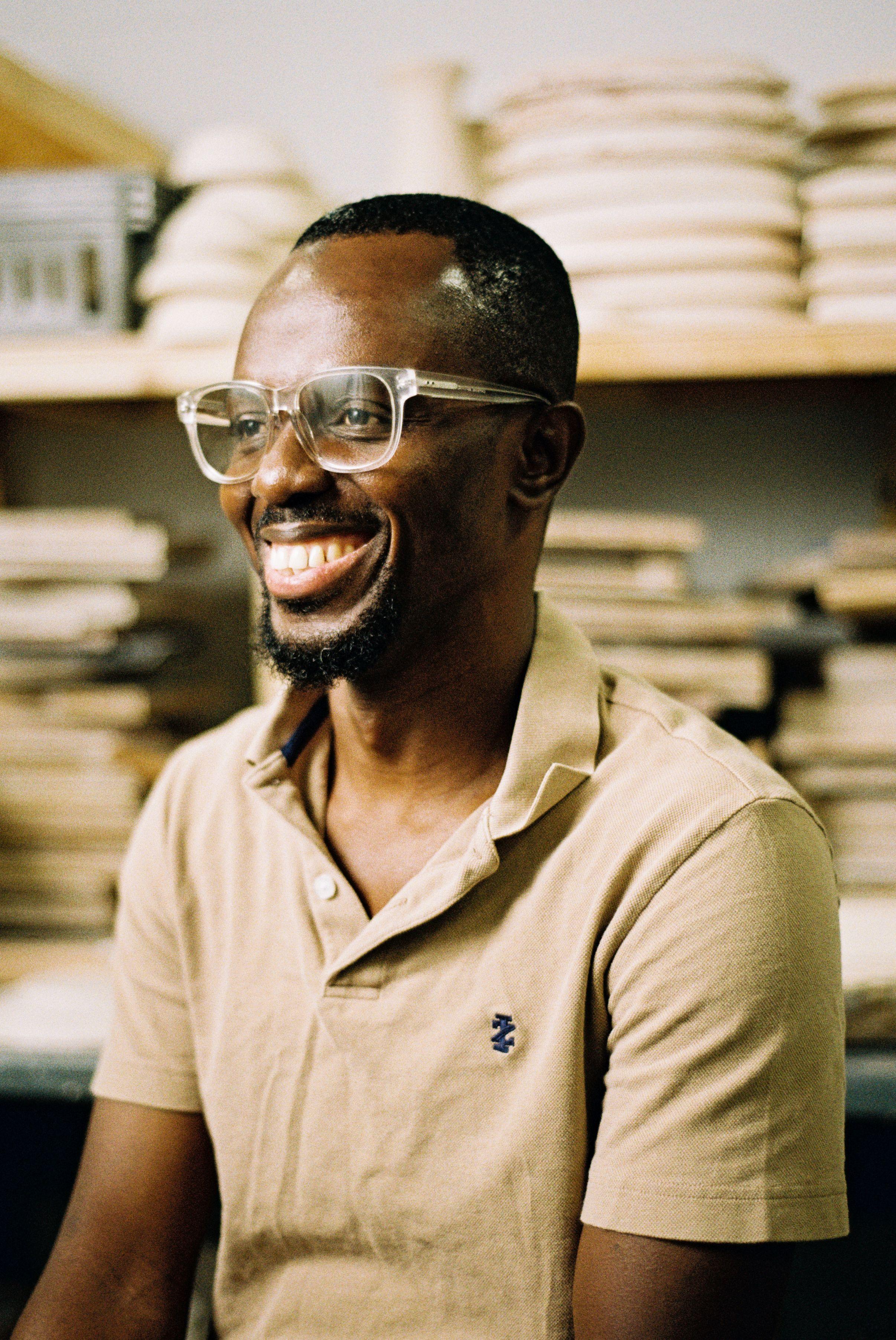
Craft can be a capacious carrier of meaning, a vehicle for symbolic inheritance. The assembled ceramic vessels of Japheth Asiedu-Kwarteng represent this idea of cross-cultural connection, alluding to traditional Ghanaian forms. A committed educator and community builder, he is currently Ceramics Program Lead at the University of Texas Rio Grande Valley, Edinburg campus.
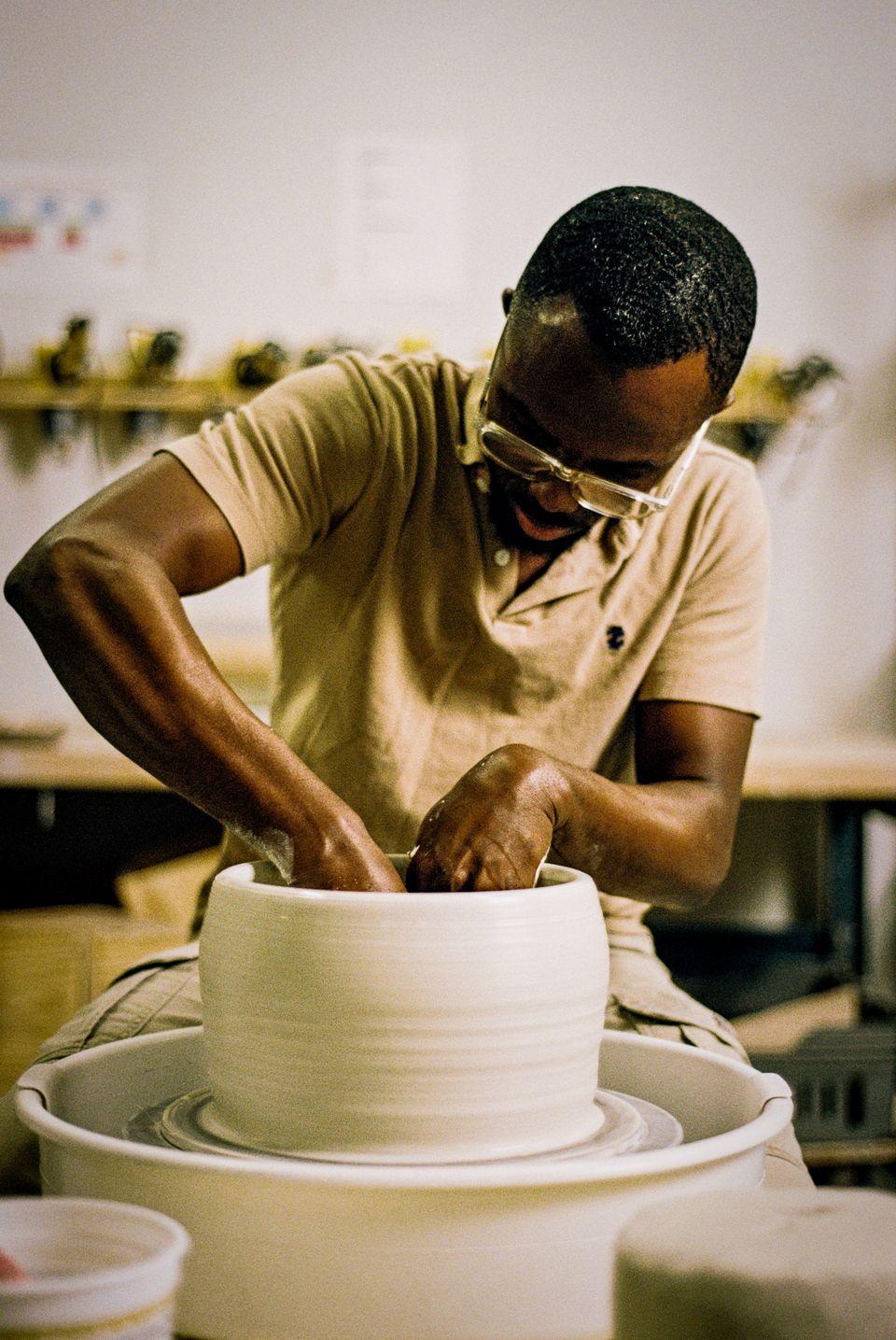
Asiedu-Kwarteng’s practice moves between wheel throwing and hand-building, bringing together Ghanaian ceramic traditions with experimentation in form, scale, and color.
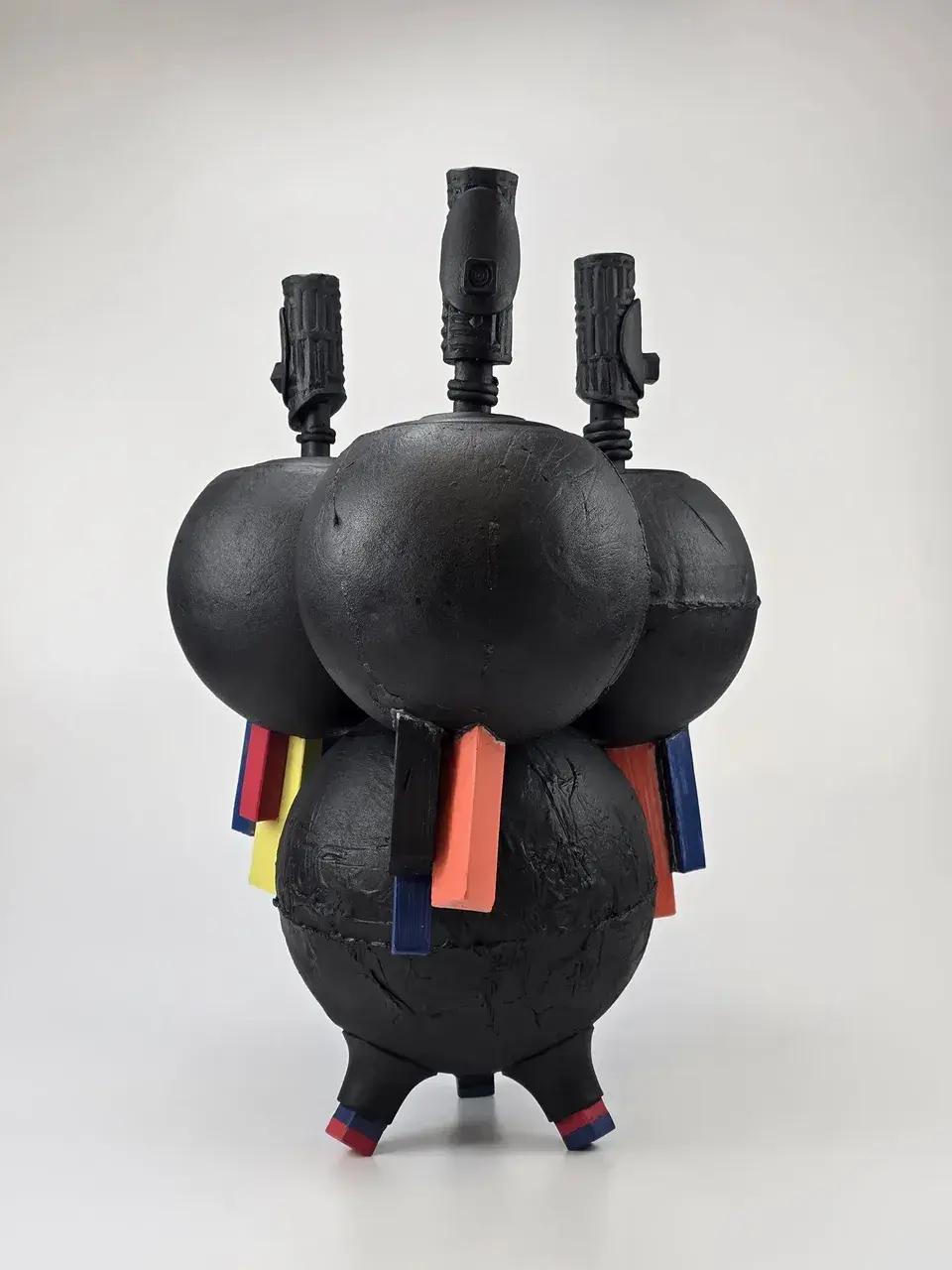
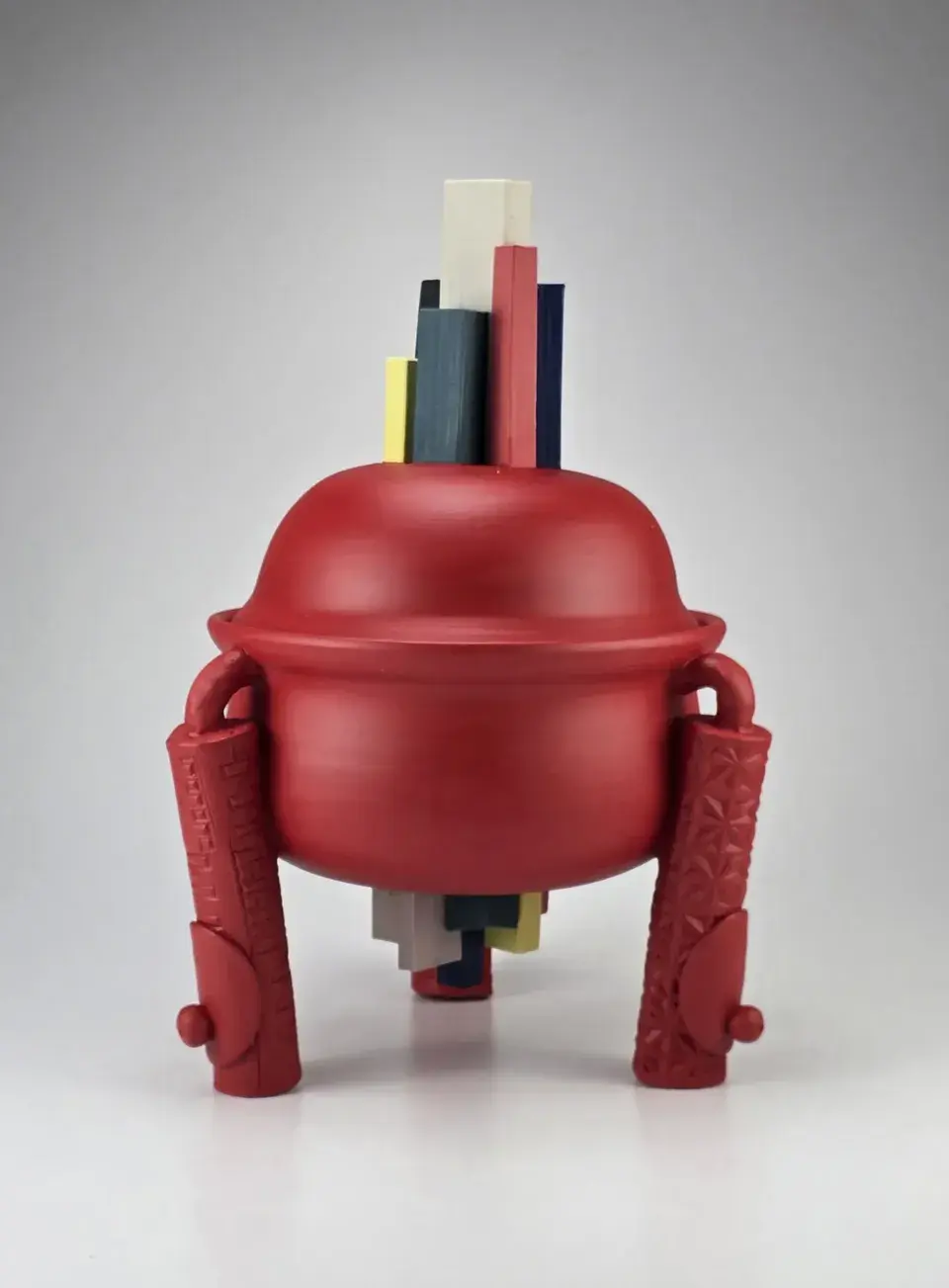
Dining with Mama & Dada: In Space
Stoneware, stained porcelain, underglaze
2026
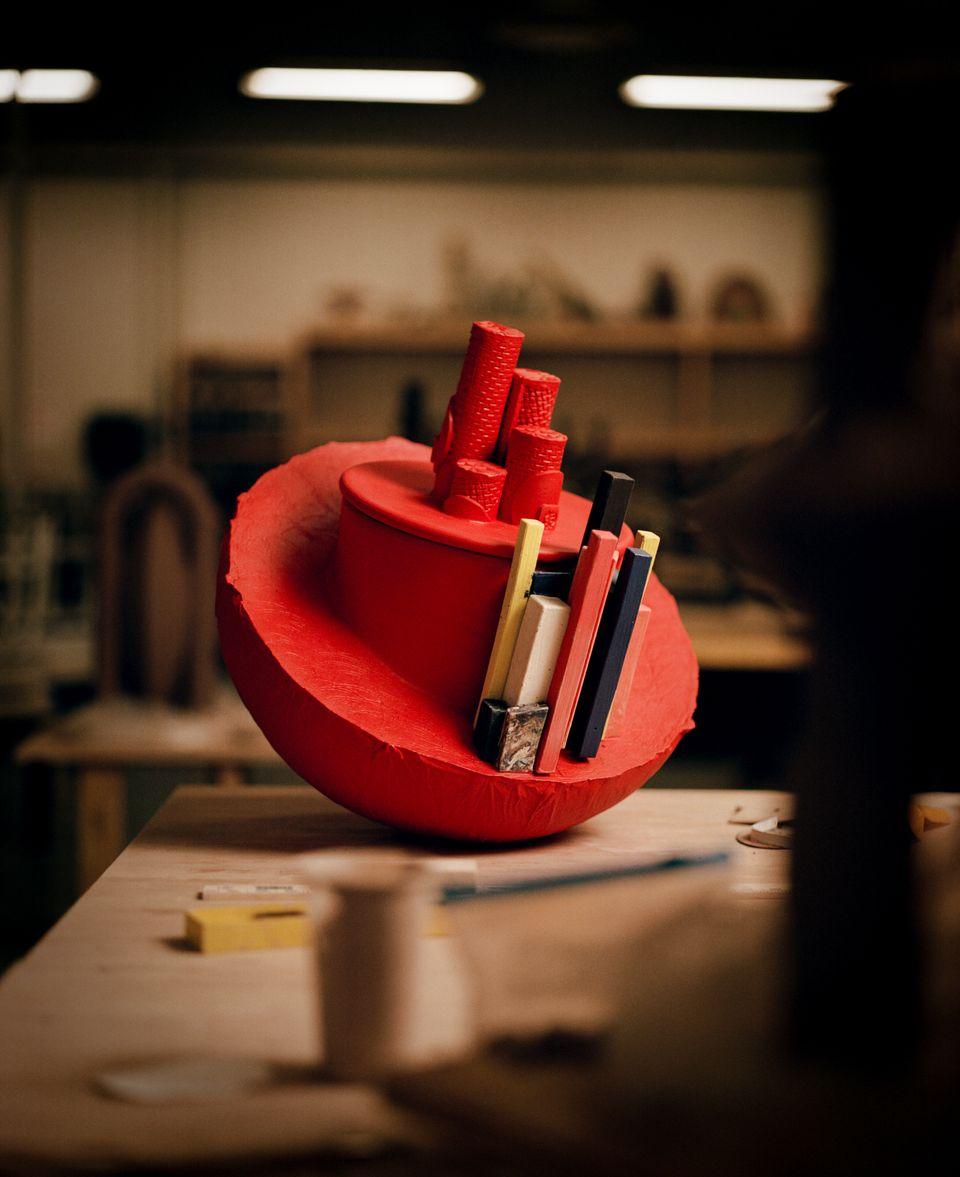
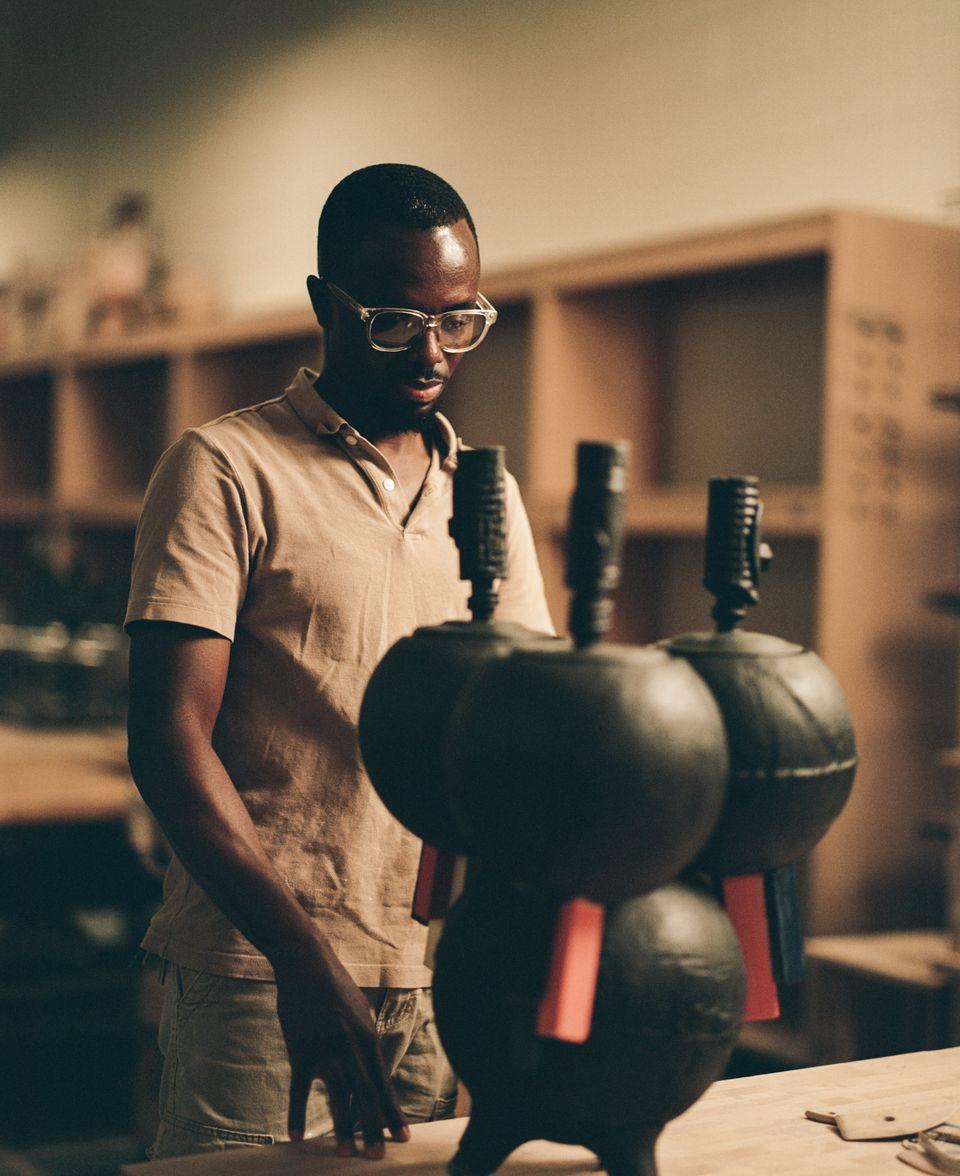
Dining with Mama & Dada: In Space reimagines the vessel as a site of architectural and symbolic possibility. Playful forms recall modular buildings and childhood building blocks, while rounded volumes, crisp geometry, and leg-like supports give the work a subtly anthropomorphic presence.
The vessel becomes at once sculpture, monument, and playful construct—an exploration of how a familiar ceramic form can be assembled, altered, and reimagined.
What role did clay play in your life growing up in Ghana?
Growing up on a cocoa farm, I encountered clay as part of everyday life. We built a mud house with red soil and anthill. We ate from apotoyowa, a grinding bowl, and drank from ahina, a water pot. These and many other childhood experiences, including sharing food together as a family and making artifacts with clay, are a constant reflection whenever I work with clay.
Walk us through your process, from an idea to a finished work.
Every work begins with the question, “Which part of my life do I want to take center stage this time?” I brood over the concept and designs for several weeks, sometimes dreaming about it and waking up to take notes. Then come decisions about the clay, forming technique, scale, display, surface, color, firing temperature, and any non-ceramic materials.
I move between wheel throwing and hand-building, with slab building as my go-to hand-building technique. My bold and bright coloring is inspired by Kente. Beyond being a cloth from my Asante and Ghanaian cultural background, it suits the premise of my practice: sharing personal and intimate experiences and stories. I borrow the communicative potential of Kente to tell these stories.
What do fingerprints and imperfections communicate to you?
Fingerprints on ceramics are evidence of history and the personal and spiritual attachment I have to my work. Fingerprints and other imperfections, as we may want to call them, bring the organic nature of the work to the fore.
I bear scars—physical, emotional, psychological, and so on. The most cathartic means to heal from these scars is through my work. The imperfections in my work are the imperfections I carry. Being able to highlight and talk about them is healing—it is acceptance. They are my vulnerability and show of strength brought to the fore. Take them out and the work becomes hollow.
You lead the ceramics program at UT Rio Grande Valley while maintaining an active studio practice. How do teaching and making inform each other?
Making is teaching, and teaching is making. By making, I am teaching myself to accept my vulnerabilities and mistakes. Working with clay has taught me patience, which is a great attribute of a good teacher and a parent. By teaching, I am making generations of makers. I am making better versions of me.
Making involves testing and experimentation that inform the knowledge and skills imparted in classrooms, studios, and labs. Conversely, my interactions with students and the conversations, discussions, and jokes we share culminate in what I make. Teaching and making advance each other.
What does it mean to receive this recognition at this stage of your career?
To say being a recipient of the Spector Craft Prize means everything to me is an understatement. This recognition is validation of my practice and an appreciation of my story. It is a great inspiration.
This award is not just praise; it is an acknowledgement that my artistic voice is contributing to something meaningful, distinctive, and necessary to society. It will increase my visibility, create opportunities, and contribute to my legacy as an artist.
What would you want the broader art world to understand about ceramics?
To the art world, ceramics is spiritual. It is culturally resonant, materially complex, and intellectually rigorous. As one of the oldest human craft traditions, ceramics has evolved into a materially, conceptually, culturally, socially, and politically sophisticated practice that engages environmental, cultural, and social issues as well as technological innovation. It is a critical sculptural medium that now operates across expanded media.