Luke-Thomas Tokimasa Henderson
Kailua, HI
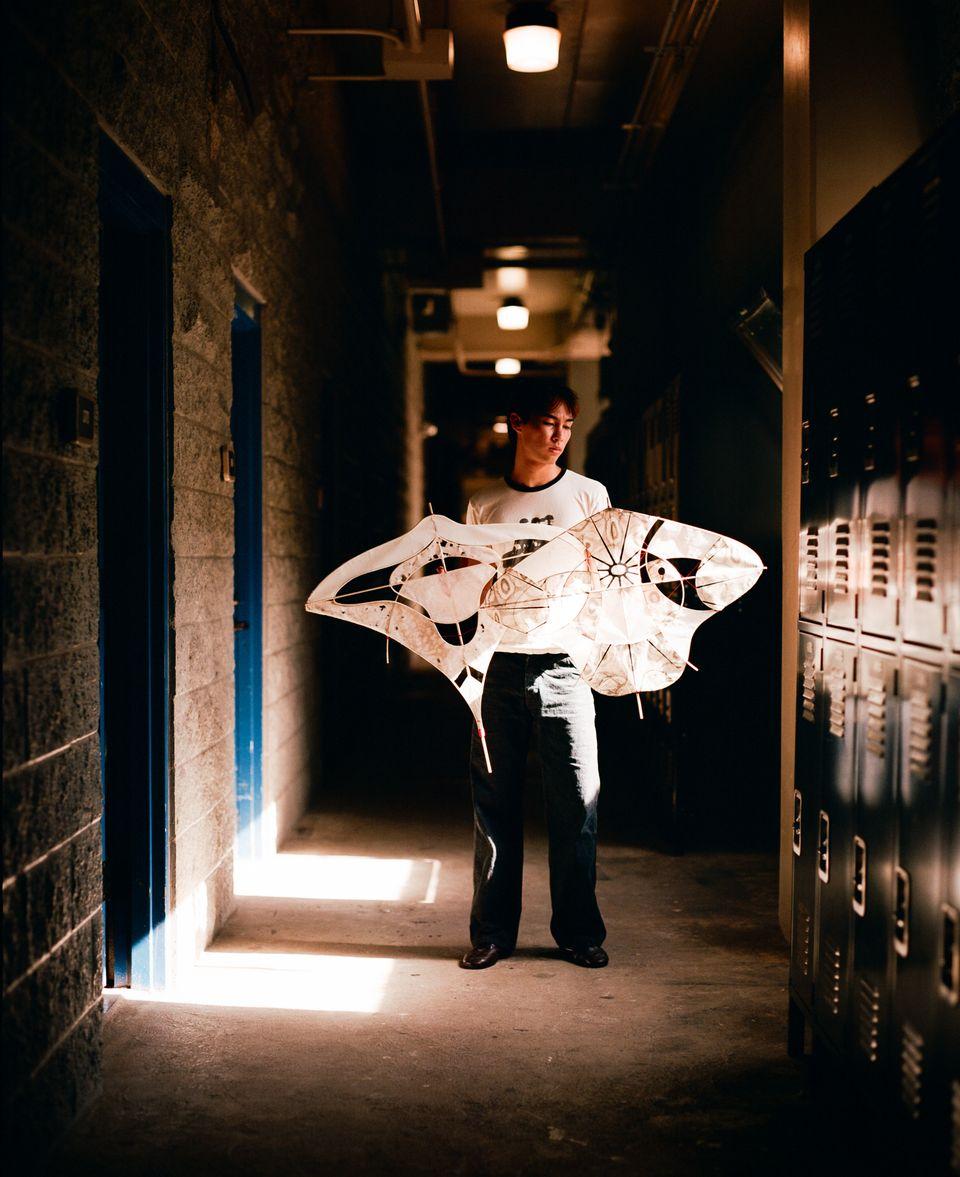
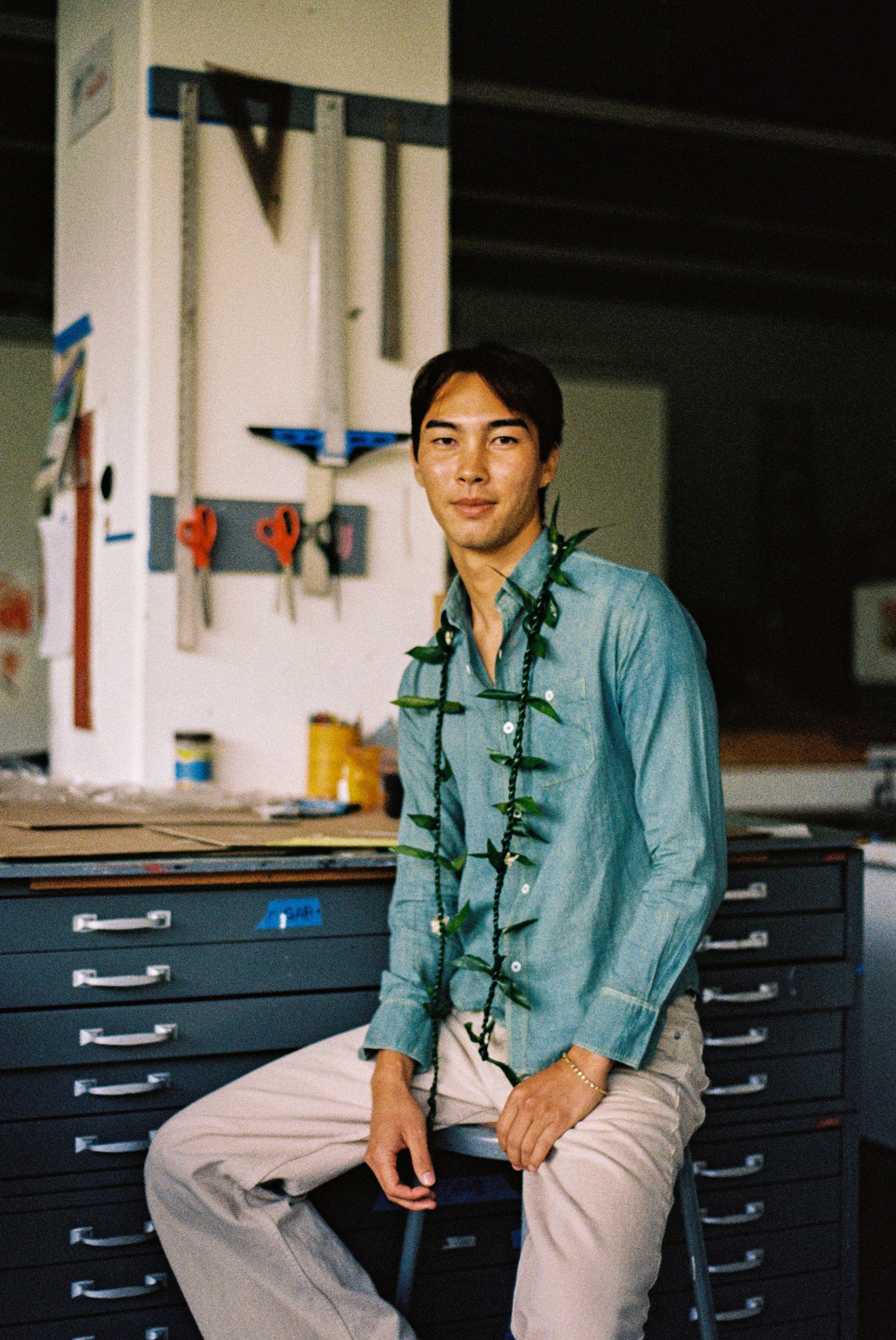
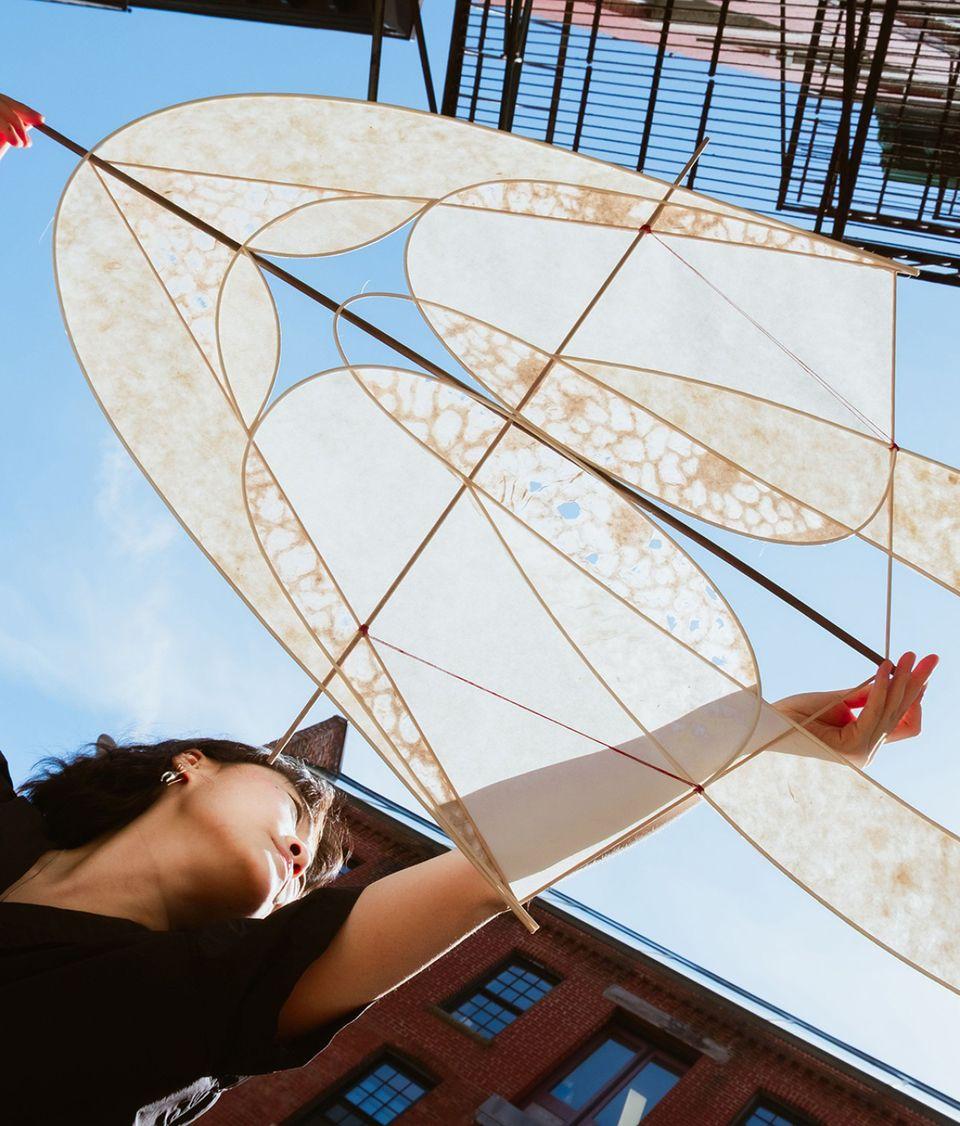
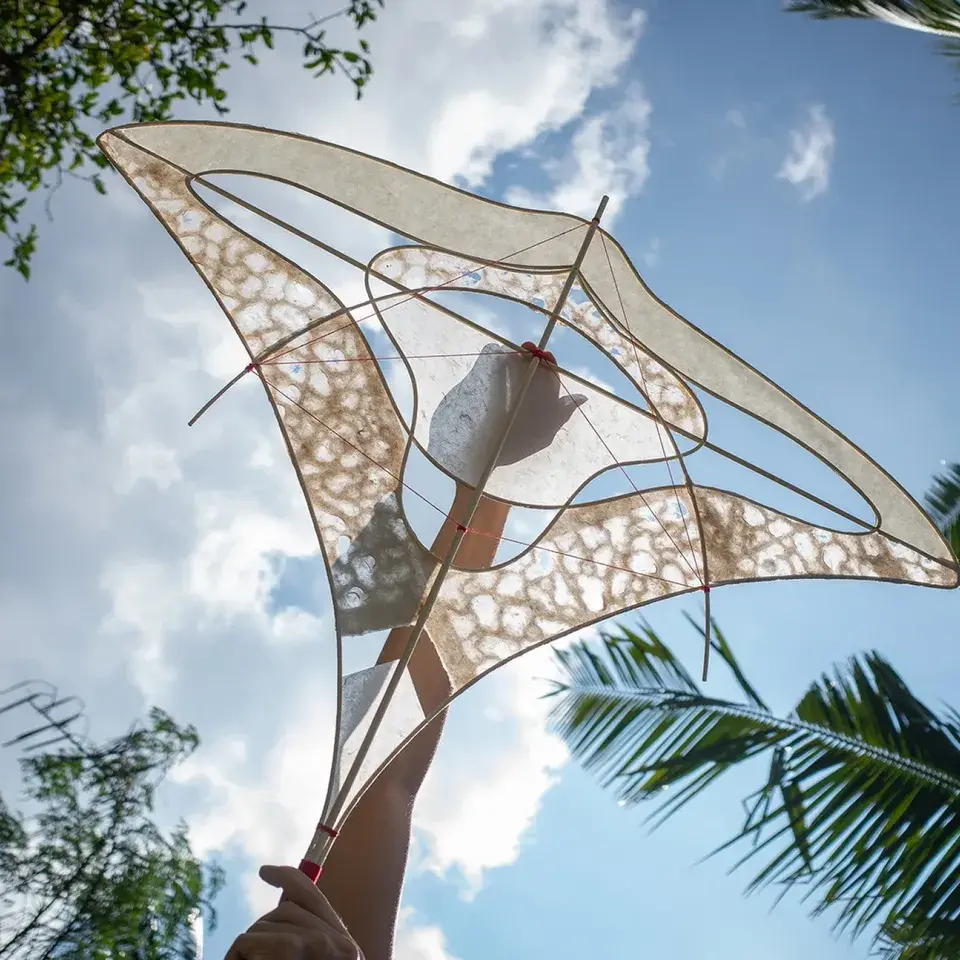
Even at its most culturally resonant, craft can delight. The skillfully wrought kites of Hawaiʻian artist Luke-Thomas Tokimasa Henderson are entirely constructed from handmade paper and other organic materials. Henderson has also explored printmaking and other mediums, always seeking contemporary expressions of ancestral Indigenous knowledge.
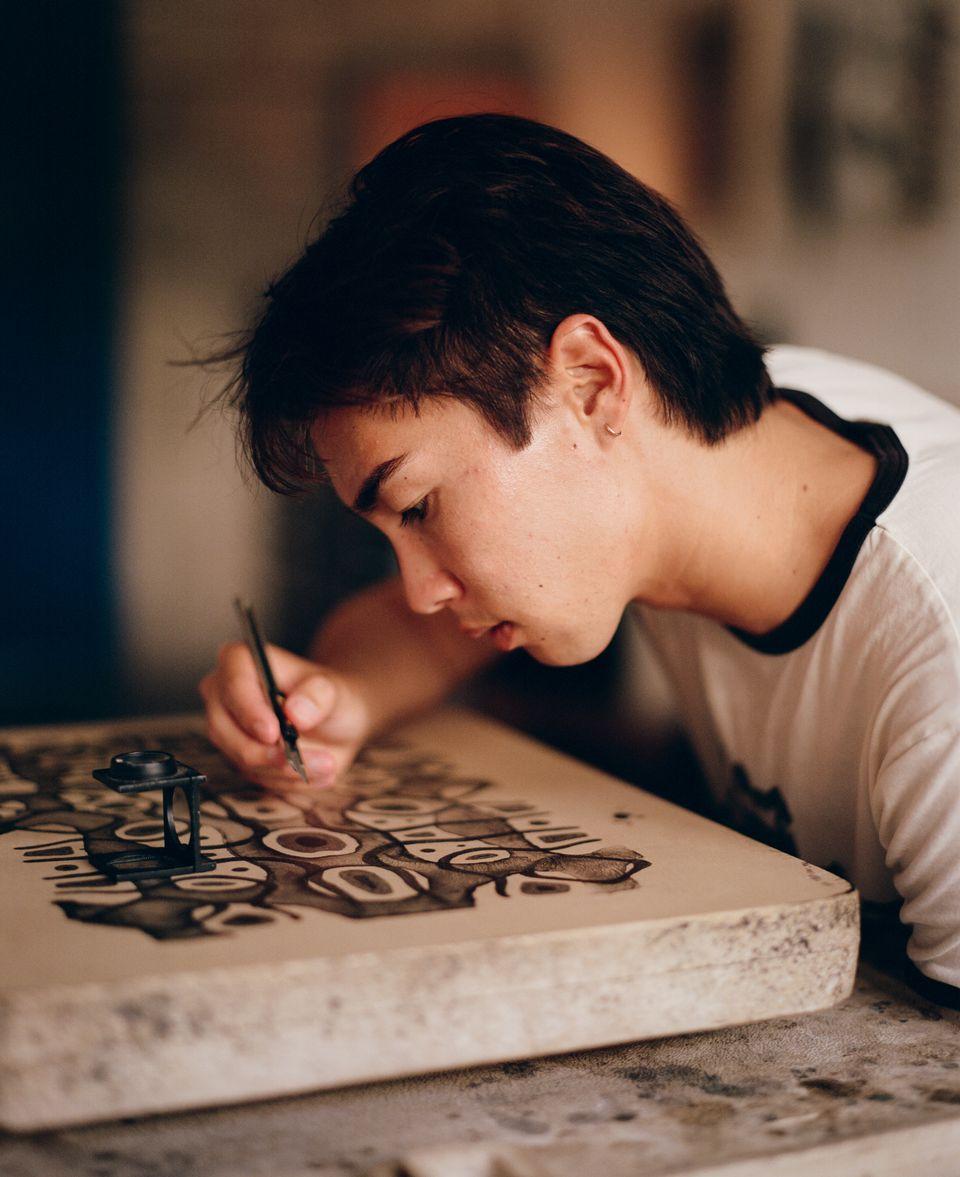
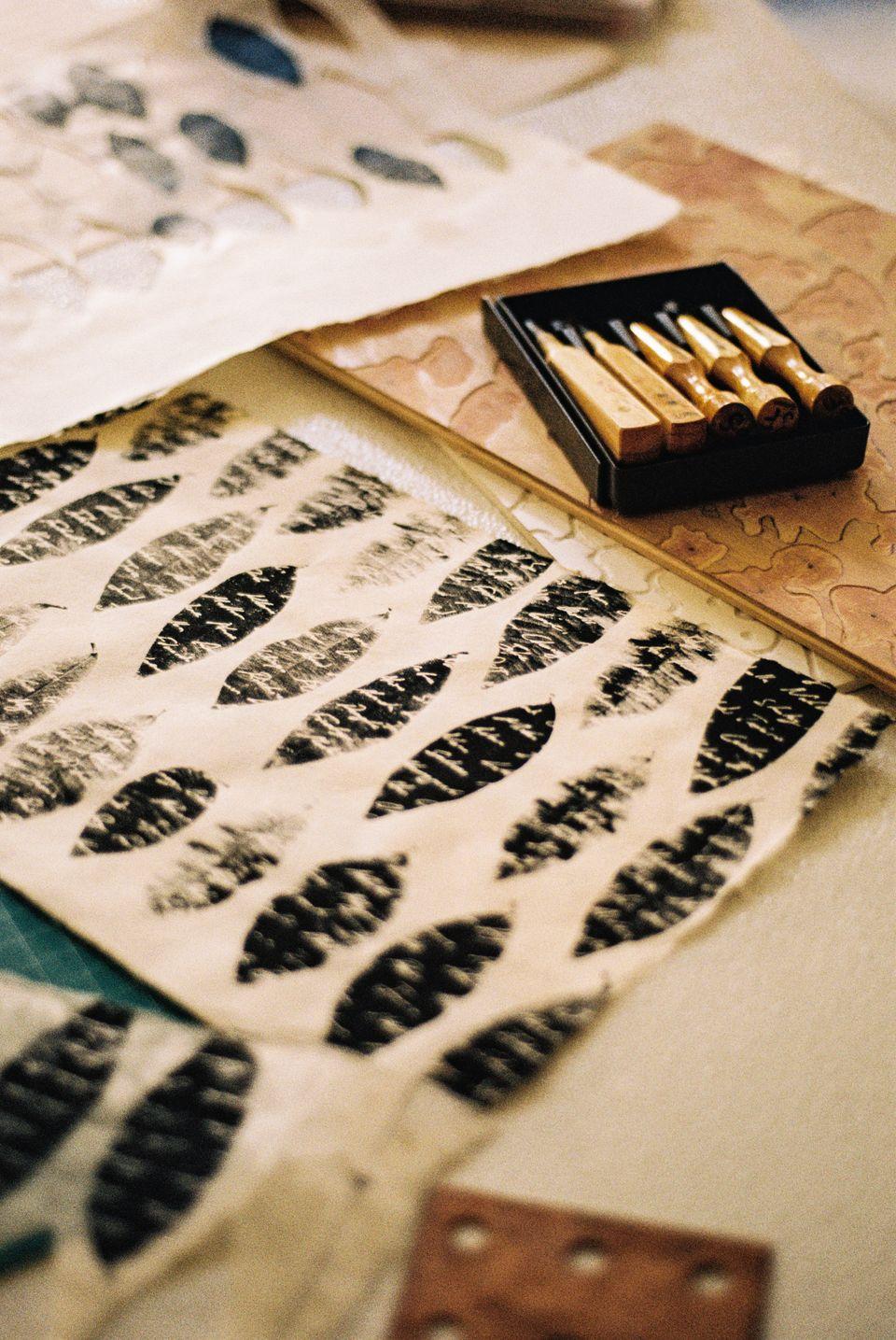
Born and raised on the east side of Oʻahu, Henderson is a multidisciplinary artist whose practice brings together papermaking, printmaking, sculpture, and installation. With a background in material and environmental science, he approaches science and craft as parallel forms of inquiry, grounded in observation, testing, repetition, and care.
Hoʻolele Lupe Series (I, II)
Handmade paper, handmade paper with watermarks, reeds, string
2025
Hoʻolele Lupe Series (I, II) draws from ancient and contemporary kite-fishing traditions practiced in Hawaiʻi and across the Pacific and Asia. The work imagines how coastal communities might adapt to environmental precarity through tools that respond directly to their surroundings, reimagining them as both survival apparatus and cultural interface.
Henderson constructs the kites using paper he grows, and harvests. Forming sheets by hand, bringing together Western and Eastern fiber traditions. Imagery emerges from the paper through a watermarking process he developed after extensive material testing. Reeds are soaked, bent, and lashed using techniques inspired by Polynesian canoe construction, to form the kite body.
Interview with Luke-Thomas Tokimasa Henderson
What drew you to handmade paper as a primary medium?
There is something deeply meaningful about knowing a material before it becomes paper. To encounter a plant in the landscape, follow it through each stage of transformation, and watch its character change without disappearing entirely creates a kind of intimacy with the process.
Being present through each stage gives me more opportunities to observe, experiment, and understand what that material can become. This helped me to develop my own techniques within the medium, including custom watermarking methods that allow patterns and imagery to emerge from within the sheet itself.
What is the relationship between the traditional kite form and what you’re making?
A few years ago, while visiting South Point on Hawaiʻi Island, I watched fishermen use trash bags caught by the offshore wind to cast their lines far into the ocean. Witnessing this made me want to investigate the historical precedent of fishing in the area. Through this research I encountered references to lawaiʻa lupe, or kite fishing, alongside petroglyphs documenting the practice in that same location. That became a starting point for understanding lupe not simply as objects, but as technologies formed through direct relationship with their environment. In Hawaiʻi, lupe occupied multiple roles, including spiritual practice, meteorology, navigation, and in stories even pulling canoes at great speed.
With the arrival of Western missionaries, kite flying was condemned as pagan and associated with sorcery, regarded as hewa, or wicked, and publicly denounced. One account warns that “all who play with kites shall die.” Much of the knowledge surrounding these practices became fragmented or obscured. Yet the fishermen I encountered at South Point suggested that the underlying logic of the technology had not disappeared entirely. What interests me is therefore not only what was suppressed, but what has evolved despite that rupture.
Papermaking is tactile and labor-intensive. What does that physicality mean for the finished work?
Papermaking has changed the way I understand authorship. There is only so much of the process you can control. As water drains through the mold, gravity pulls thousands of suspended fibers into relation with one another, forming structures that I can influence but never entirely dictate.
The work becomes stronger when I learn how to work alongside those forces rather than impose upon them. The process reminds me that we are not separate from the systems around us; we are participants within them. The finished work becomes a record of that relationship, carrying traces of both the maker and the material itself.
What has been the hardest part of establishing yourself as an artist this early in your career, and what does it mean to be supported at this stage?
I did not grow up thinking I could become an artist. As a child, I saw myself as untalented because I could not draw or paint well, and for a long time I avoided art altogether knowing how hard of an economic venture it was, especially living in the most expensive state in the US.
Finally deciding to pursue this path meant accepting the possibility that I might not be able to give back to my parents before they pass, that I might not be able to live or raise a family in the place where I grew up, or that I could be gambling with everything generations before me had worked toward. Many of them setting aside their own passions and ambitions to give me the privilege of deciding what I wanted to do with my own life.
My practice exists because of those sacrifices, the knowledge shared by my teachers and mentors, and the friends and community who continued to make space for me when I needed it. Receiving the Spector Craft Prize is incredibly meaningful because it affirms that the values and perspectives I carry have a place within broader conversations about contemporary craft. To receive that kind of support at this stage feels like a continuation of everything that made this possible in the first place. I feel an immense sense of gratitude, but also responsibility.
What do you hope people feel when they encounter your work?
If someone spends time with the work and leaves thinking about a place they miss, an individual or community who shaped them, or their own relationship to the land around them, that's enough for me. The work is successful when it becomes less about my experience and more about creating a space where someone can reflect on the marks we leave behind and who is left to carry them.