Merryn Omotayo Alaka
Chicago, IL
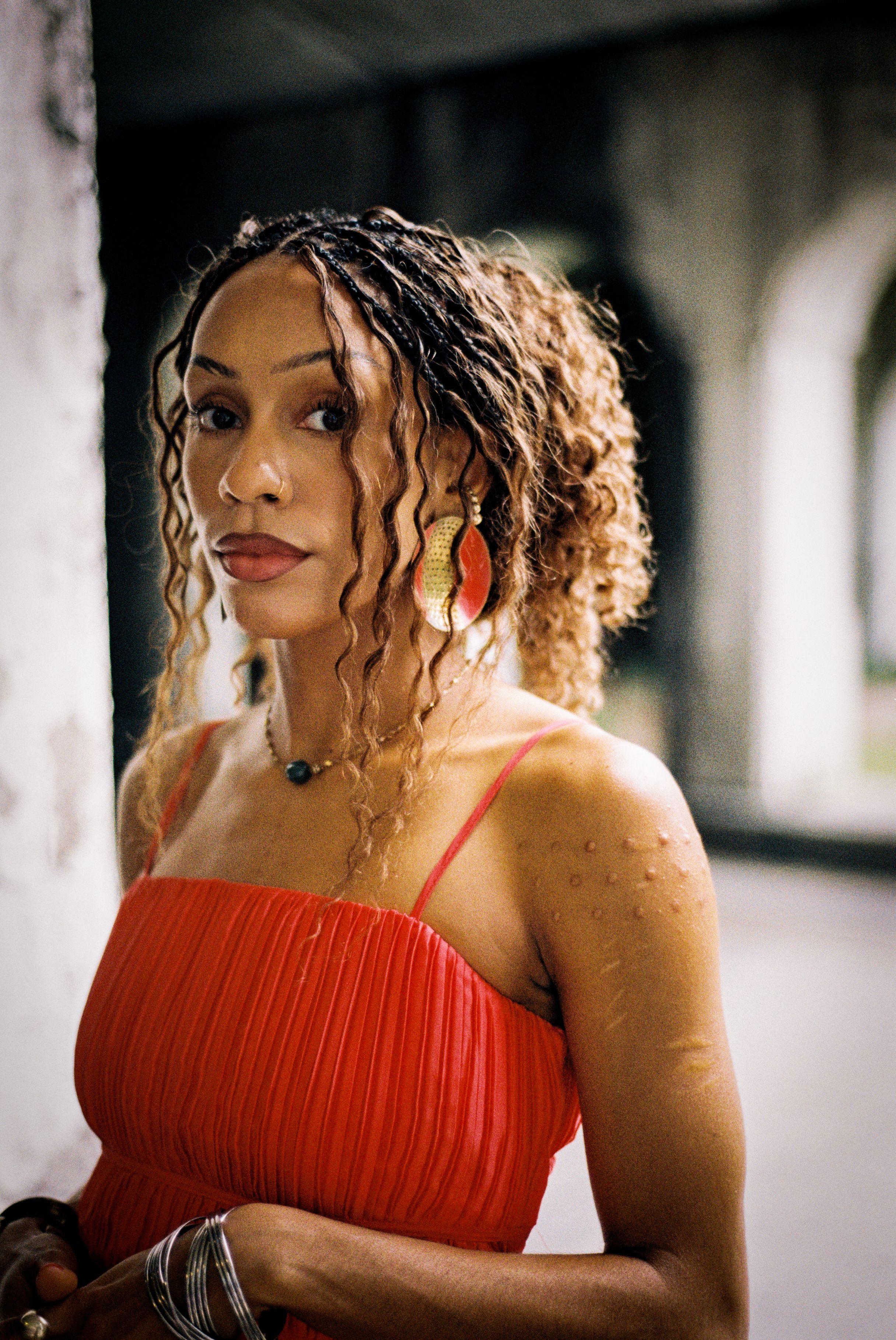
Craft today takes many forms, crossing many mediums. This multivalent approach is embodied by Chicago-based artist Merryn Omotayo Alaka, who works across sculpture, sound, found objects and textile-based assemblage to examine how objects carry memory, belief, and lived histories through material form. Alaka traces how value, history, and meaning are constructed, preserved, and reproduced, reconstructing inherited, found, and mass-produced materials into forms that bear witness to the ongoing negotiation between preservation and erasure.
Alaka recently completed her MFA in Fiber and Material Studies at the School of the Art Institute of Chicago, where she received the James Raymond Nelson Fellowship. Her work has been exhibited at the Phoenix Art Museum, the Tucson Museum of Art, the Scottsdale Museum of Contemporary Art, and the Museum of Contemporary Art Arlington. She maintains a collaborative practice with artist Sam Fresquez entitled Hairland alongside her individual studio practice.
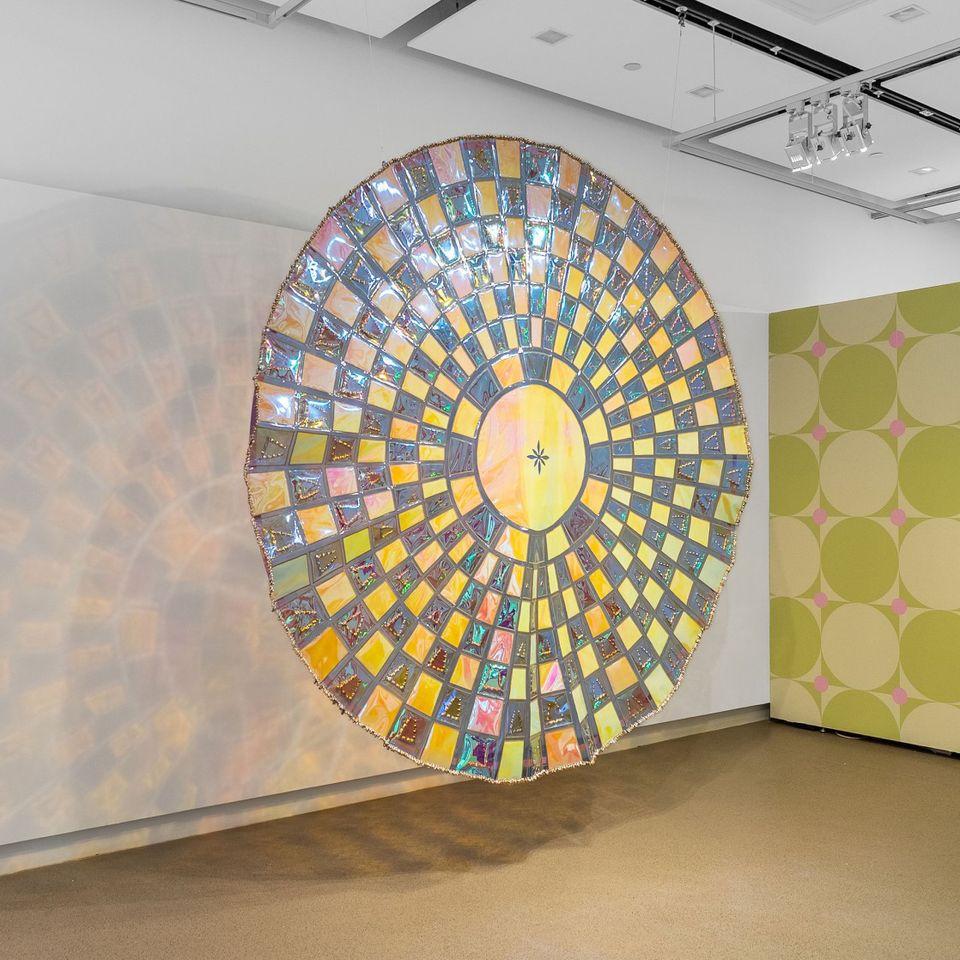
To Hold, To Bear, To Witness
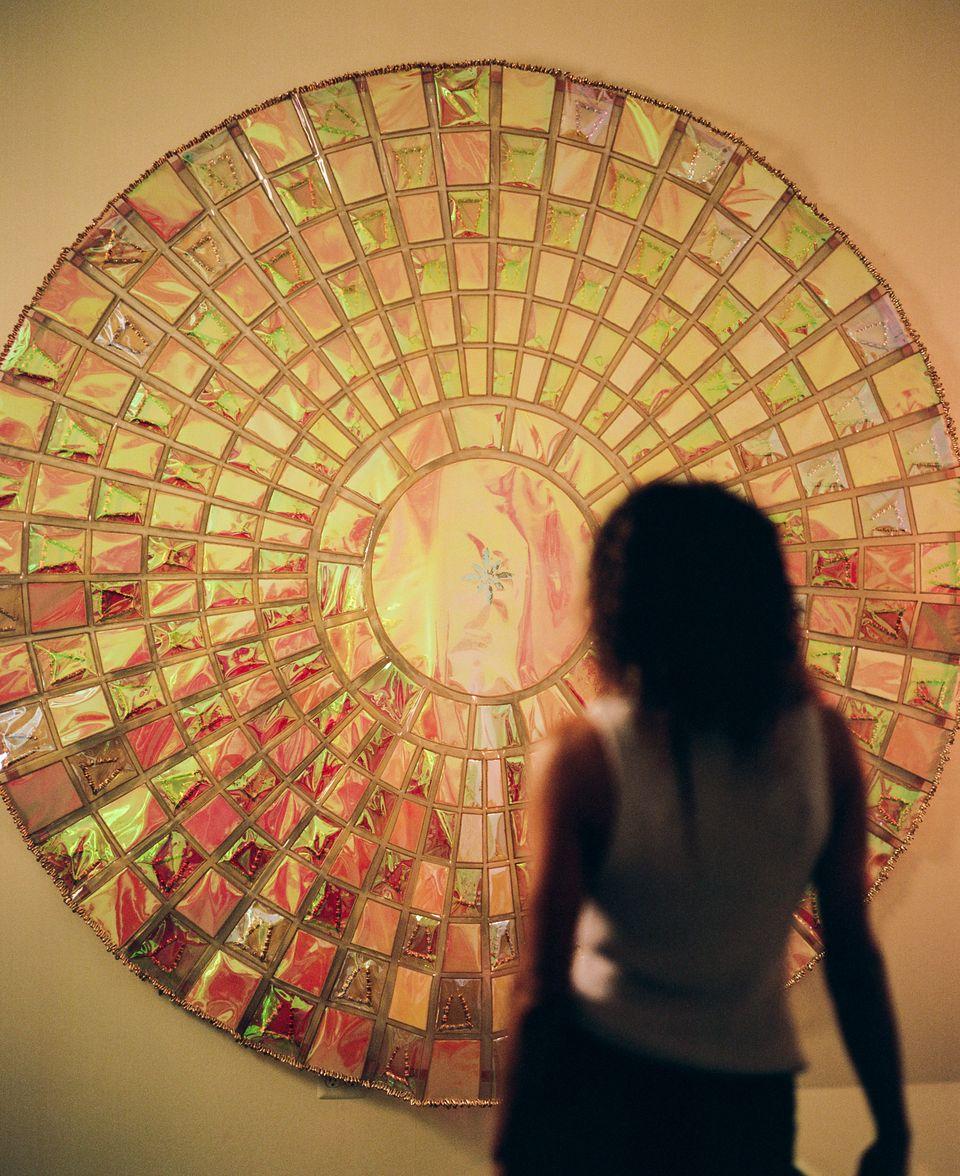
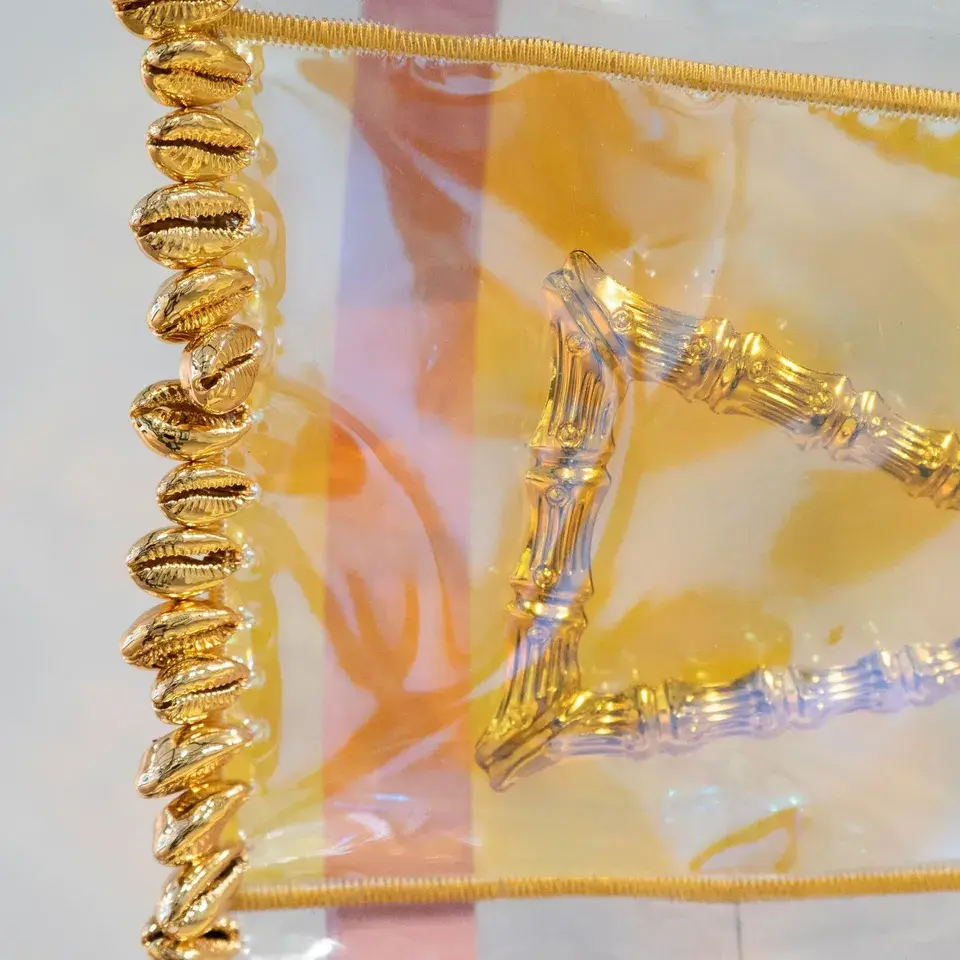
Vinyl, thread, hair, earrings
2025
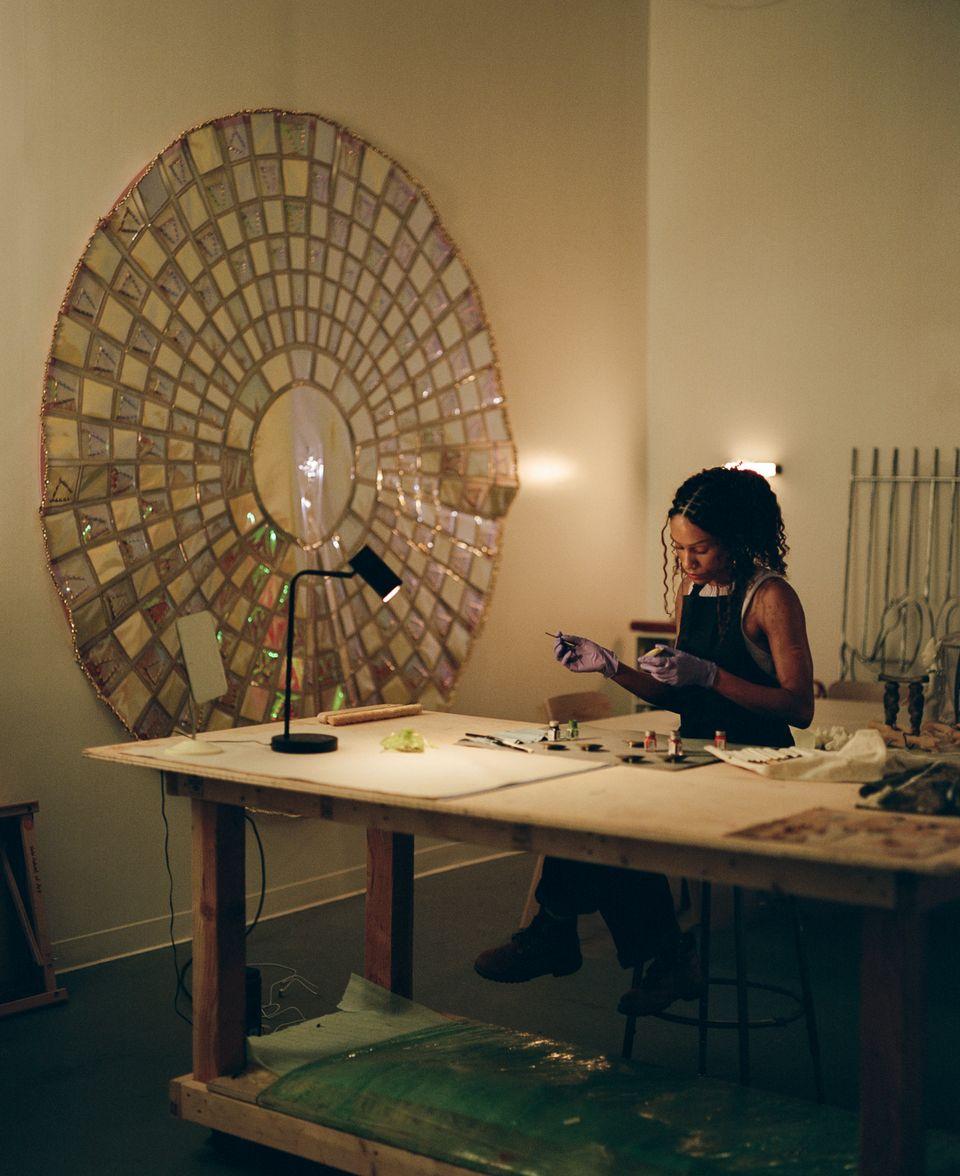
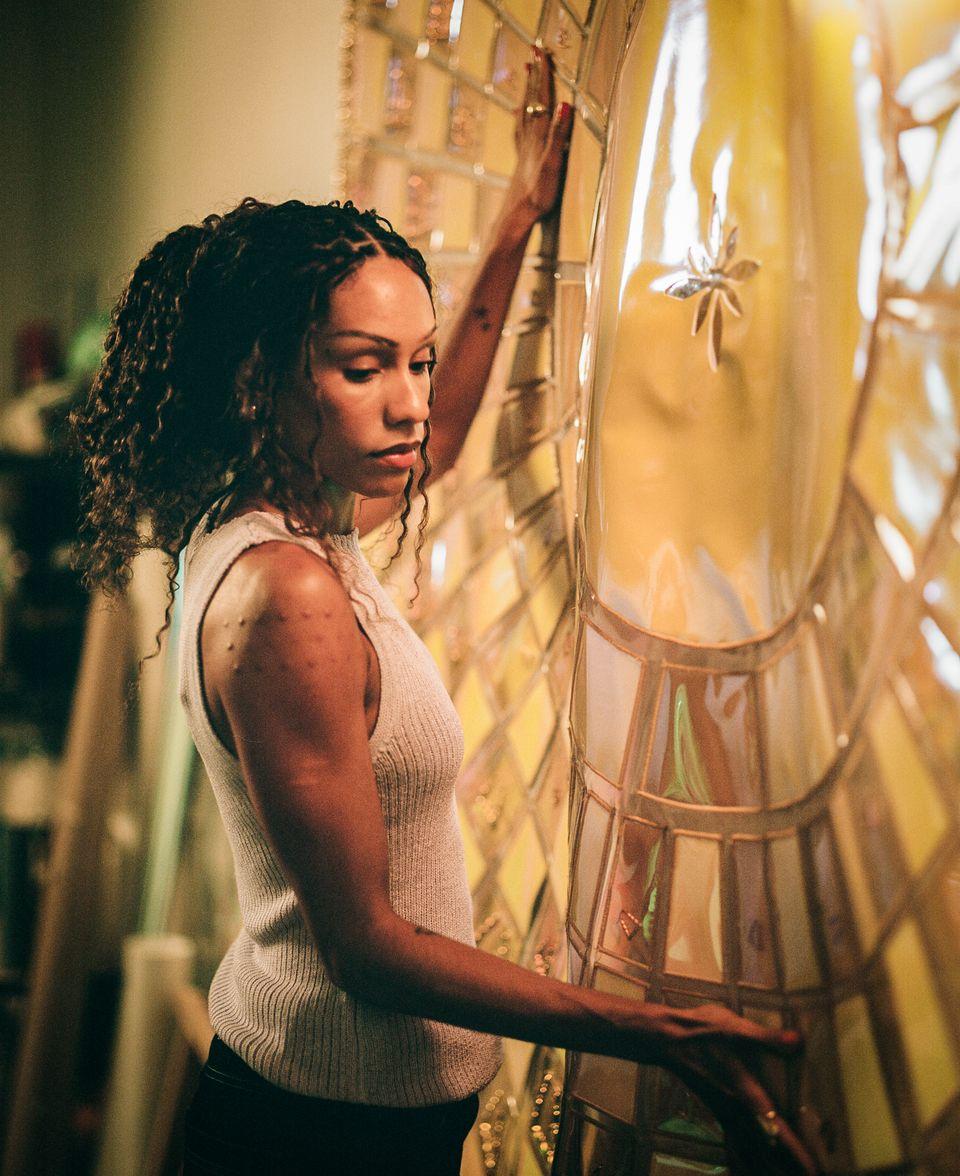
To Hold, To Bear, To Witness draws on the form of traditional Nigerian leather mats, reimagined through vinyl and plastic. Incorporating gold earrings sourced from beauty supply stores, the quilt preserves aspects of Black material culture while raising questions about value, authenticity, and mass production. Encircled with cowrie shells, the work becomes both a radiant portal and a protective barrier—holding space for memory, resilience, and cultural continuity.
Interview with Merryn Omotayo Alaka
Your work spans sculpture, installation, performance, and fiber. How do you hold these different forms within a single practice?
While working across disciplines, I always find the visual language of my work exists within one landscape. The objects, materials, elements, and patterns I activate are always in conversation with one another, both intimately and collectively across time and histories. Within this perspective, it feels natural to hold them all together.
Hair and earrings are objects with strong cultural and personal resonance, particularly for Black women. What do you want the viewer to hold when you incorporate them into your work?
In To Hold, To Bear, To Witness, I use hair and earrings alongside vinyl and plastic “leather” to reimagine Nigerian leather mats created by the Hausa people of Northern Nigeria. Gold earrings sourced from a local beauty supply store in South Chicago and from e-commerce sites become a way to preserve and contain Black material culture while also questioning material authenticity and the mass production of objects with deep ties to Blackness.
The intention of most of my work is to pose questions rather than propose answers. I'm asking viewers to consider their relationship with objects and materials as sites where value, history, and meaning are constructed, preserved, and reproduced.
What has your experience in contemporary art spaces taught you about how craft is perceived?
One of the first artists who shifted my own perspective on conceptual craft was Sonya Clark. When I first started working with craft processes, she encouraged me to consider craft through non-traditional lenses and as a space to participate in larger conversations of history and culture.
I carry that framework at the forefront of my practice, and I've been fortunate to find institutional spaces that nourish meaningful conversations around contemporary craft.
What does it mean to be seen and supported at this stage of your career?
To be seen and supported at this stage in my life feels incredibly significant, and I don't take it lightly. I am recently out of graduate school, building a studio practice in a new city, and figuring out where and how I want to continue to grow my career in a deeply intentional way, so I am grateful and honored.
What has maintaining a studio practice taught you about pace and rest?
Balance, compromise, and burnout are challenges I am constantly negotiating with. I've had to learn to research and make at my own pace and to trust my process, my practice, and my pace. Tuning into what my body and physical capacity allow has become increasingly important.
The stress of overworking and pushing past my limits has taught me hard lessons about when to take breaks. Rest should be part of the practice, but oftentimes isn't, especially for artists of color.