Vivian Chiu
Richmond, VA
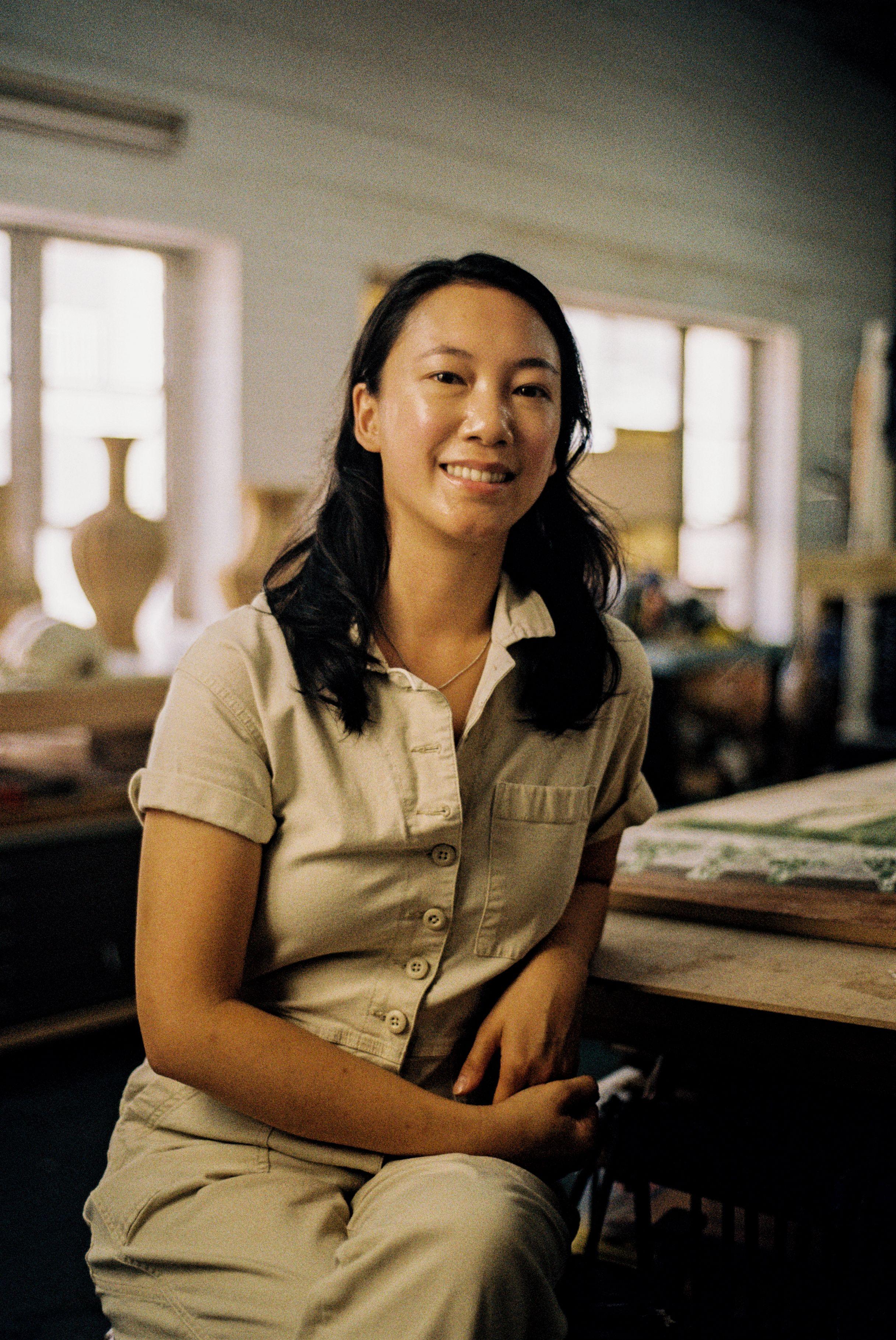
Craft is not one language, but many. Richmond-based artist Vivian Chiu creates complex sculptures and vessels that explore the relationship between what is fixed and how it is perceived. Highly skilled in traditional woodworking, she employs these techniques in unexpected ways, so that her forms appear permanently in flux.
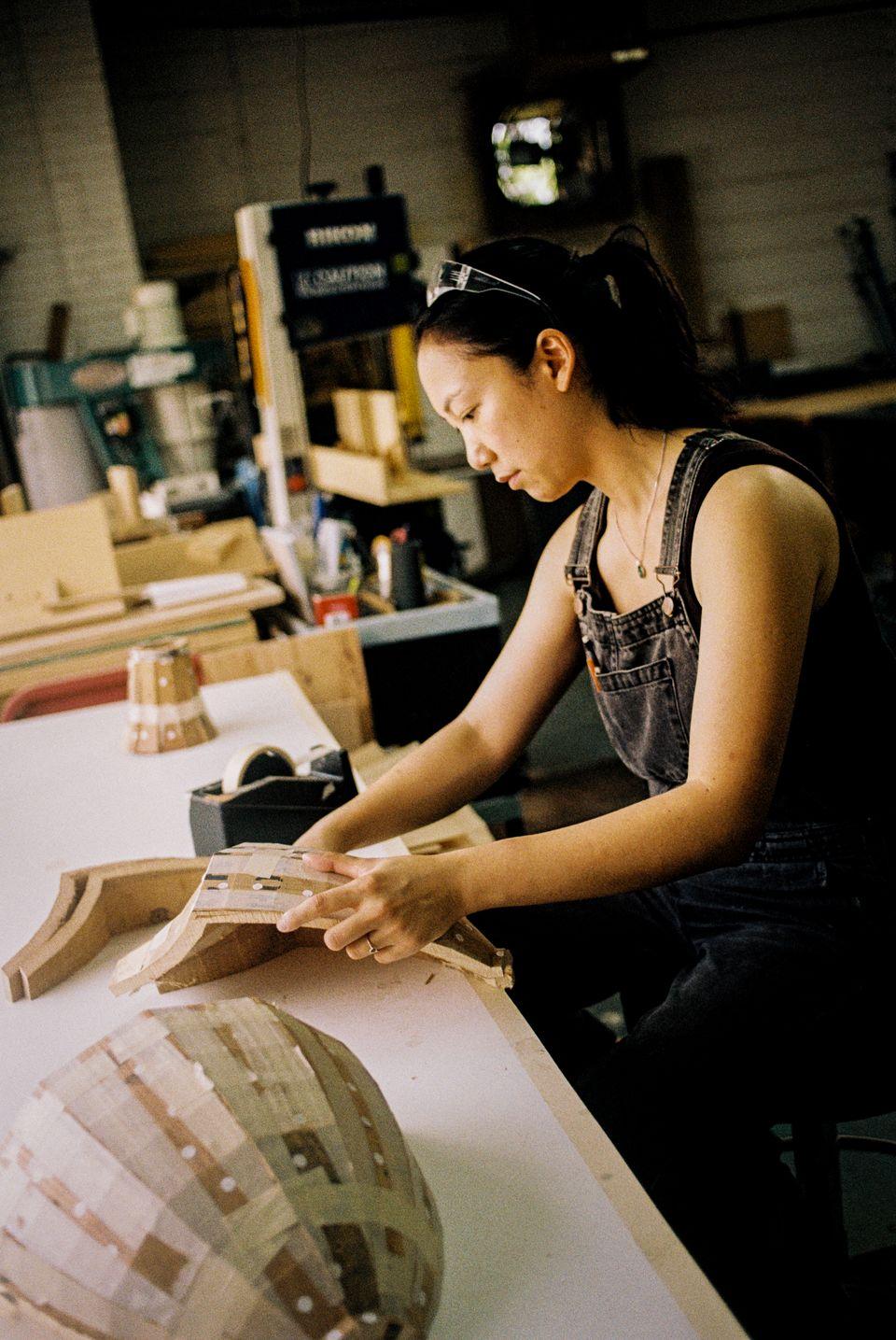
Chiu studied furniture design at the Rhode Island School of Design before earning her MFA in sculpture from Columbia University. Her labor-intensive practice transforms wood into optical sculptures and vessels, combining meticulous construction with repetition, perception, and storytelling. Her work is held in the permanent collections of the Museum of Fine Arts, Houston, the Museum for Art in Wood, the Arkansas Museum of Fine Arts and the New York State Museum.
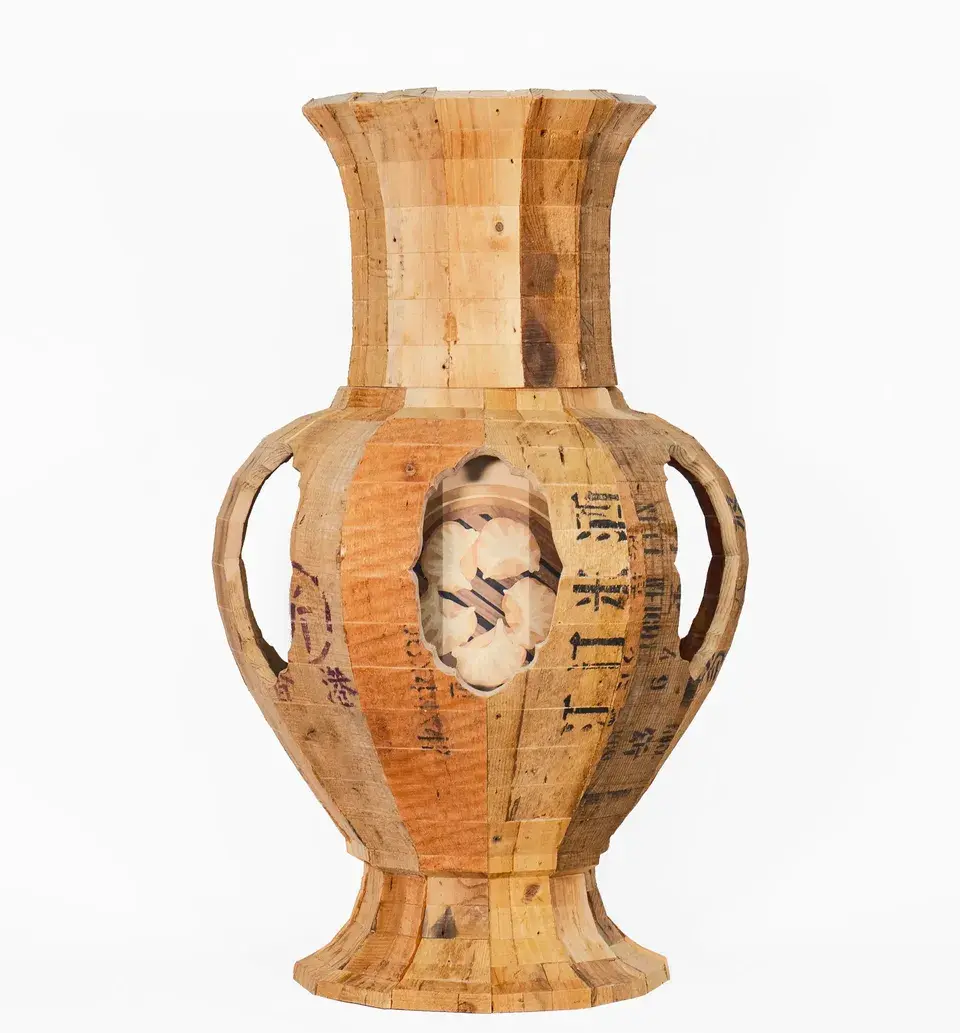
Passages (those who carried us)
Pine crate wood from Wing On Wo & Co., rosewood stand,
various wood veneer, plywood
2023–26
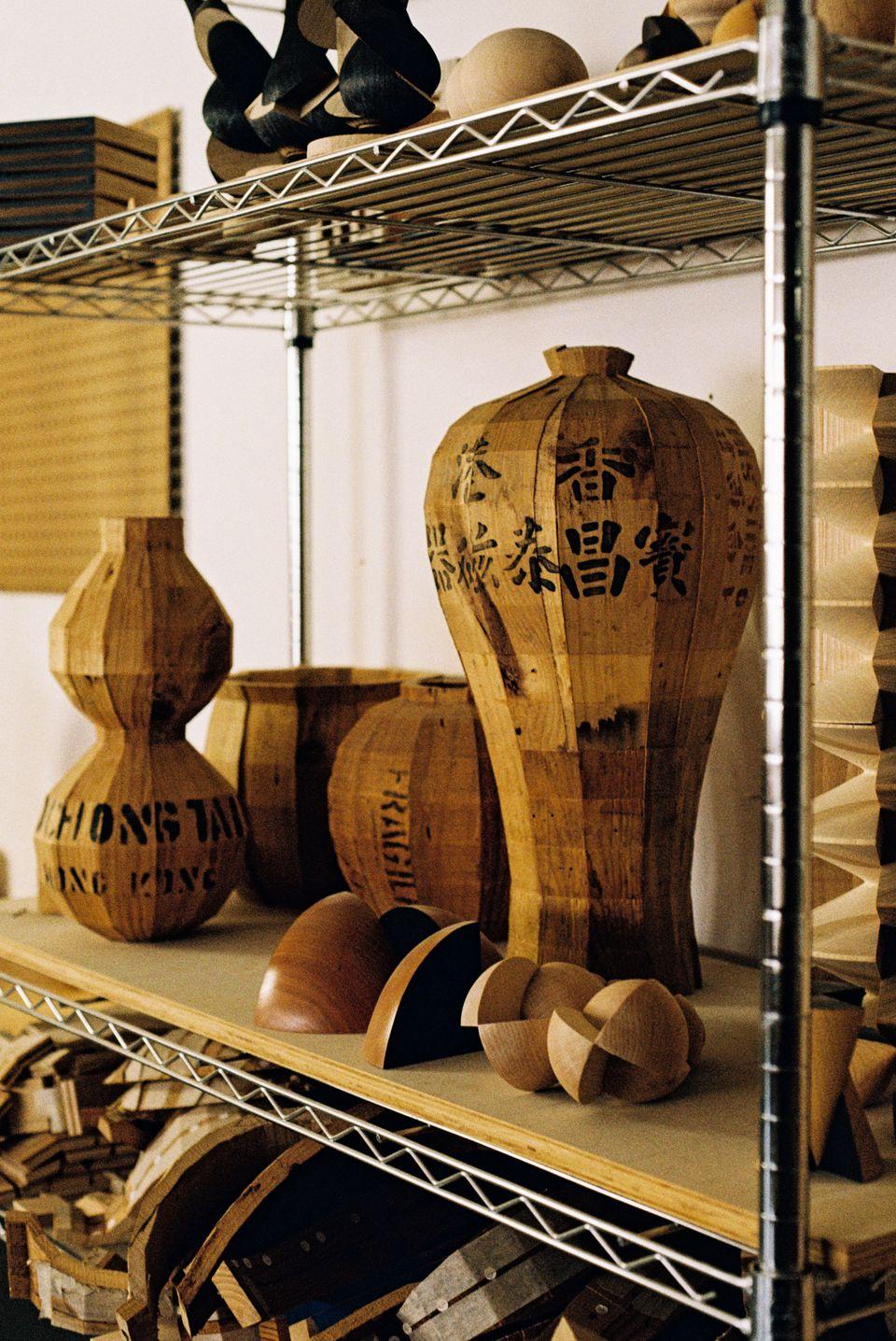
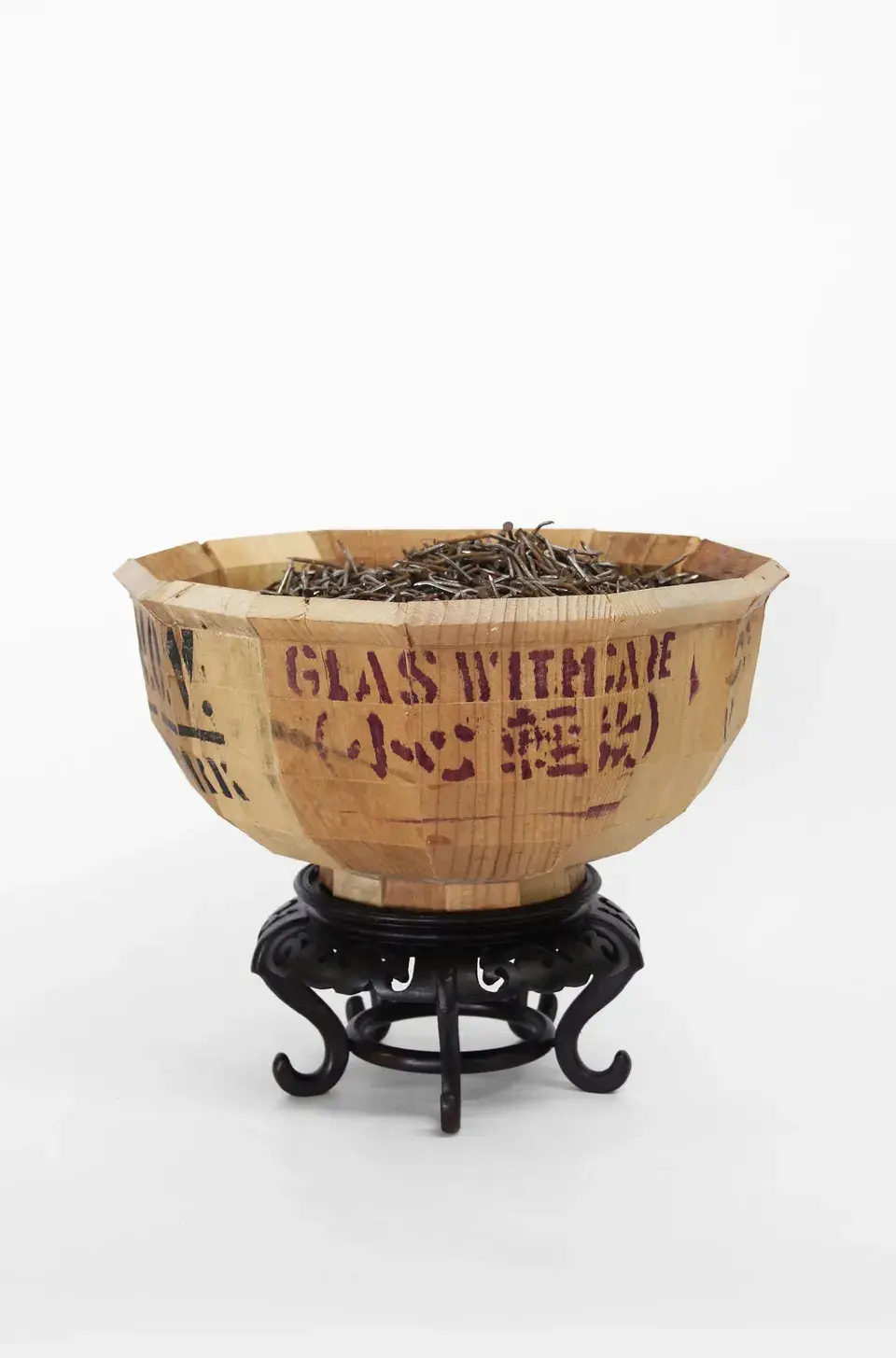
Passages (those who carried us) is part of a larger series of vessels made from heirloom crates from Wing On Wo & Co., the oldest operating general store in New York’s Chinatown. Once used to transport porcelain from Hong Kong to New York, the crates are deconstructed, cut into faceted pieces, and reassembled to echo the ceramic vessels they once held.
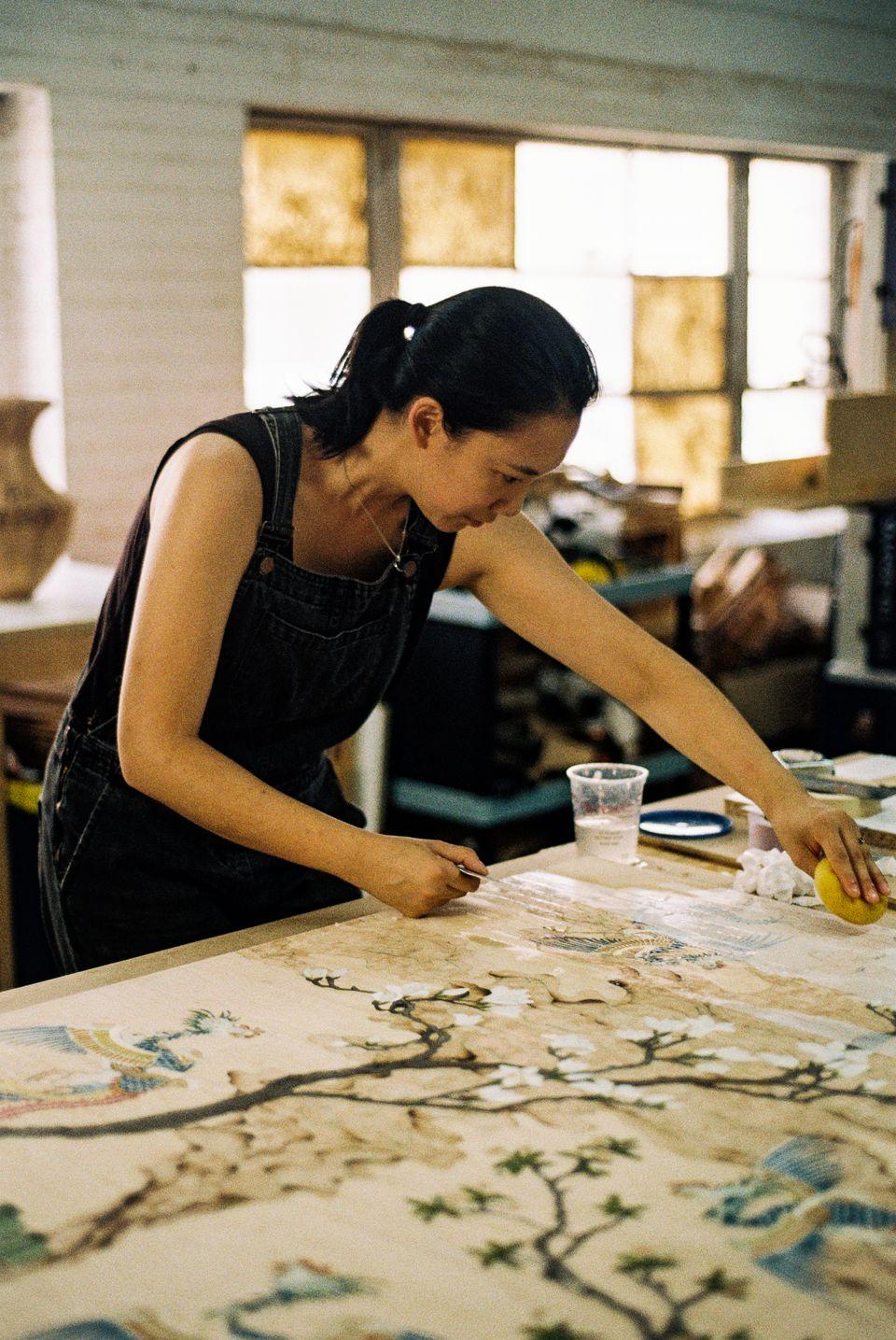
Their stamps, markings, nail holes, and signs of wear remain visible, preserving traces of their journeys. Using double-bevel marquetry, Chiu embeds traditional and contemporary motifs into rotating interior vessels, creating forms within forms that shift as the viewer moves around them.
Interview with Vivian Chiu
You trained in furniture design at RISD and sculpture at Columbia. How do those two disciplines live in your work today?
RISD was where I developed a love for woodworking and realized I was more interested in using wood in a sculptural way. Rather than functioning as a piece of furniture, I wanted my work to operate as a storytelling device. Between RISD and Columbia, I spent five years in Brooklyn as a studio assistant to Ursula von Rydingsvard, fabricating large-scale wood sculptures and learning a more improvisational approach to working with wood. I also developed my own system for constructing complex, multi-part works.
At Columbia, I was able to hone my artistic voice and make work that was more personal and emotionally charged, creating self-portrait sculptures that played with perception and opticality.
The crates in Passages carry stamps, markings, nail holes, and signs of wear. Why was it important to preserve those traces?
The crates, donated to me by Wing On Wo & Co., had traveled primarily from Hong Kong to the United States, a journey that mirrored my own. Their histories are embedded in the material itself: shipping stamps, pencil markings, nail holes, and signs of wear all serve as records of labor, transit, and movement across time and place.
As I regarded the crude wood of these containers and the long journeys they endured, I began to think of the crates as elders who weathered and withstood the violence of migration and assimilation. Through transformation rather than erasure, the works honor the material's history, allowing the vessels to carry forward the stories already embedded within the wood.
Your work explores visibility and perception. How do those ideas connect?
As a queer Asian woman living in the United States, I am constantly thinking about visibility: what is seen, what is overlooked, and how identity shifts depending on context. In my work, optical effects become a way to explore these questions. Many of my works require the viewer to move around them in order to fully perceive the image or form. The act of looking is never neutral; it is shaped by assumptions, histories, and personal experience.
What does making an object by hand mean to you in a moment when so much production is automated or digitally mediated?
For me, making objects by hand is both a source of joy and a way of thinking. I enjoy transforming material and discovering solutions through direct engagement with the work. For the most part, I avoid using computers in my practice. I still draft by hand.
Working by hand creates a different relationship to time, material, and process. Learning a technique is a dialogue with the people who practiced it before you. Craft is not static; it is a living archive, a continuous act of making, unmaking, and reimagining.
What does the Spector Craft Prize add to the recognition you’ve already received?
Winning the Spector Craft Prize is incredibly validating. Making work often involves uncertainty, and this recognition gives me confidence to trust my instincts and my process. It encourages me to continue taking risks, experimenting with new techniques, and working at larger scales.